
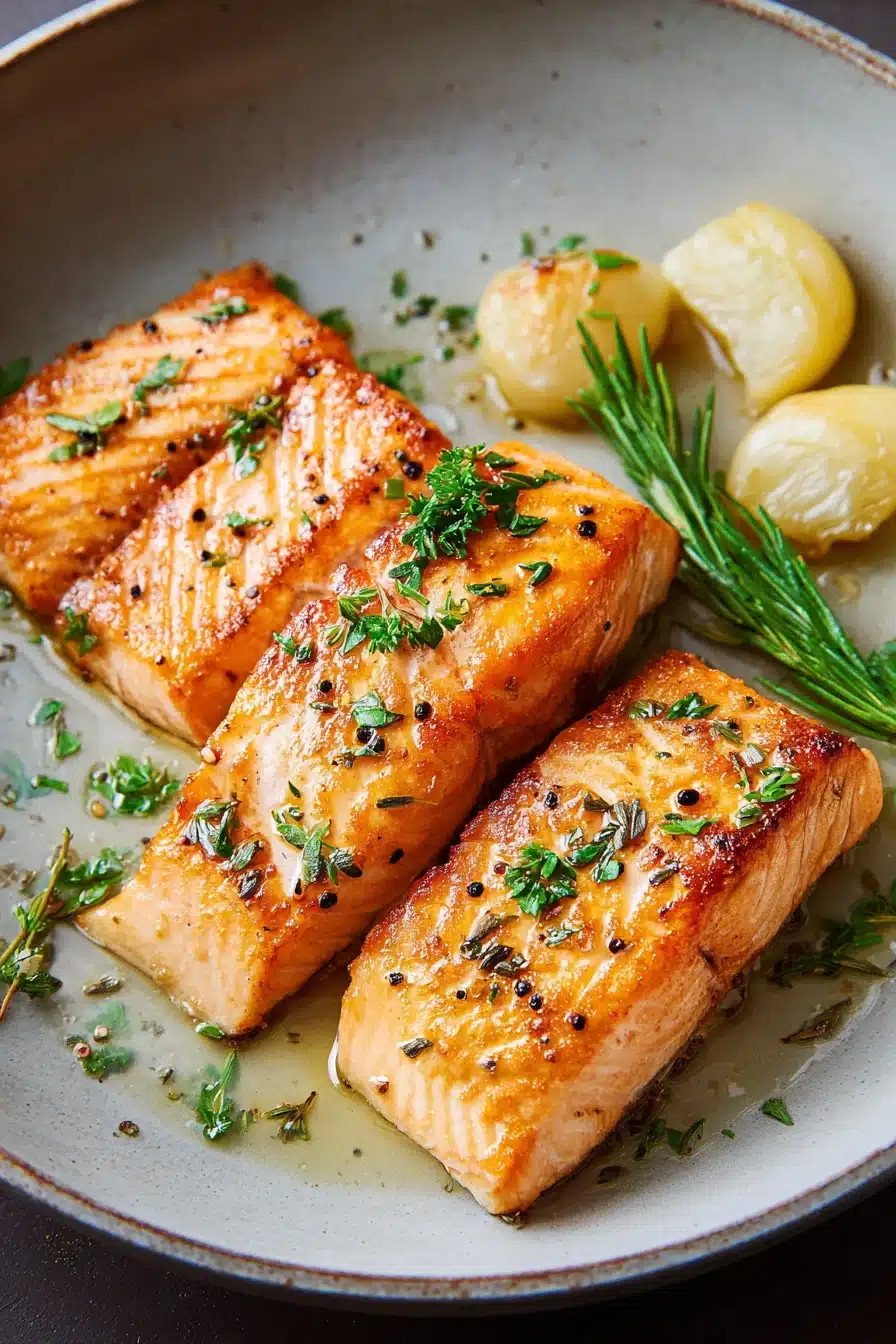
Pan Seared Salmon
Pan seared salmon is a versatile and delicious dish that’s perfect for a quick, healthy weeknight dinner. This recipe guides you through the process of achieving a perfectly cooked, moist salmon fillet with a crispy, golden-brown crust. Whether you’re a seasoned cook or a beginner, this easy-to-follow method will help you master the art of pan searing salmon.
Why You’ll Love This Recipe
- Quick and Easy: Ready in just 20 minutes, this recipe is perfect for busy weeknights.
- Flavorful and Moist: The combination of a crispy exterior and tender, juicy interior makes this salmon irresistible.
- Healthy and Nutritious: Salmon is packed with omega-3 fatty acids and high-quality protein.
- Customizable: Easily adapt this recipe to suit your taste preferences with different seasonings and sauces.
- Impressive Presentation: The beautiful golden-brown crust and vibrant garnishes make this dish look as good as it tastes.
Ingredients & Preparation Notes
- Salmon fillets: Choose fresh, high-quality salmon for the best flavor and texture. Look for fillets that are firm and have a vibrant color. Skin-on fillets work best for this searing method.
- Olive oil: Use a good-quality olive oil with a high smoke point to prevent burning.
- Kosher salt and black pepper: Season the salmon generously for maximum flavor.
- Lemon: Fresh lemon juice adds a bright, tangy note to the dish.
- Fresh dill: This herb complements the rich flavor of salmon beautifully.
When selecting your ingredients, opt for wild-caught salmon if possible, as it tends to have a richer flavor and higher nutrient content than farm-raised varieties. If you can’t find fresh dill, you can substitute with other fresh herbs like parsley or chives.
Professional Tips & Techniques
- To achieve the perfect pan seared salmon, follow these professional tips:
- Preheat your skillet properly: A hot skillet is essential for a good sear. Let it heat up for a few minutes before adding the oil and salmon.
- Don’t move the salmon: Resist the urge to move the fillets around in the pan. Let them cook undisturbed to develop a crispy crust.
- Use the right tools: A stainless steel or cast iron skillet works best for searing. Avoid non-stick pans, as they don’t get hot enough for a proper sear.
- Check for doneness: Use an instant-read thermometer to ensure the salmon reaches 145°F (63°C) internally. You can also check for flakiness with a fork.
- Let it rest: Allow the salmon to rest for a few minutes after cooking to let the juices redistribute for a moist, flavorful result.
Recipe Variations
- This pan seared salmon recipe is versatile and can be adapted to suit various tastes and dietary needs. Here are some delicious variations to try:
- Lemon Herb Salmon: Add a tablespoon of chopped fresh herbs like thyme or rosemary to the olive oil before searing for a fragrant twist.
- Spicy Salmon: Mix 1/2 teaspoon of chili powder with the salt and pepper for a spicy kick.
- Honey Glazed Salmon: Brush the salmon with a mixture of 2 tablespoons honey and 1 tablespoon soy sauce before searing for a sweet and savory glaze.
- Mediterranean Salmon: Top the cooked salmon with a mixture of diced tomatoes, olives, and feta cheese for a Mediterranean-inspired dish.
- Asian-Inspired Salmon: Marinate the salmon in a mixture of soy sauce, ginger, and garlic for 30 minutes before searing for an Asian flavor profile.
- Herb-Crusted Salmon: Press the seasoned salmon into a mixture of chopped fresh herbs and breadcrumbs before searing for a crispy, flavorful crust.
- Pesto Salmon: Spread a thin layer of pesto on the salmon fillets before searing for a burst of fresh, herby flavor.
- Citrus Salmon: Use orange or grapefruit juice instead of lemon for a different citrus note.
Serving Suggestions
- Pan seared salmon pairs well with a variety of side dishes and can be served in different ways depending on the occasion:
- Weeknight Dinner: Serve with a simple green salad and roasted vegetables like asparagus or broccoli.
- Elegant Dinner Party: Plate the salmon on a bed of creamy mashed potatoes or risotto, garnished with fresh herbs and lemon wedges.
- Summer BBQ: Serve the salmon at room temperature on a platter with grilled vegetables and a citrus vinaigrette.
- Healthy Lunch: Flake the leftover salmon over a bed of mixed greens, topped with avocado, cherry tomatoes, and a light vinaigrette.
- Pairing Suggestions: This dish pairs well with a crisp white wine like Sauvignon Blanc or a light, fruity red like Pinot Noir.
Storage & Make-Ahead Tips
- Storage: Store leftover salmon in an airtight container in the refrigerator for up to 3-4 days.
- Reheating: Gently reheat the salmon in a low oven (275°F/135°C) or in the microwave on a low setting to prevent overcooking.
- Freezing: You can freeze cooked salmon for up to 2-3 months. Wrap tightly in plastic wrap and then foil before freezing.
- Make-Ahead: You can season the salmon fillets up to a day in advance and store them in the refrigerator until ready to cook.
Frequently Asked Questions
Q: Can I use frozen salmon for this recipe?
Yes, you can use frozen salmon. Thaw it overnight in the refrigerator before cooking for the best results.
Q: How do I know when the salmon is done?
The salmon is done when it reaches an internal temperature of 145°F (63°C) and flakes easily with a fork.
Q: Can I sear the salmon without the skin?
Yes, you can sear skinless salmon fillets. However, the skin helps protect the flesh and adds extra flavor and texture.
Q: What if my salmon sticks to the pan?
Make sure your skillet is hot enough before adding the salmon. If it still sticks, gently ease a spatula under the fillet to release it.
Q: Can I use other seasonings besides salt and pepper?
Absolutely! Feel free to experiment with different herbs and spices to suit your taste preferences.
Q: How can I prevent the salmon from curling up in the pan?
Press down gently on the fillets with a spatula for the first 20-30 seconds of cooking to ensure even contact with the pan.
Q: Can I cook the salmon to medium-rare?
For food safety, it’s recommended to cook salmon to an internal temperature of 145°F (63°C). However, some people prefer their salmon medium-rare at around 125°F (52°C). If you choose to do this, be aware of the potential food safety risks.
Q: What’s the best way to reheat leftover salmon?
Gently reheat the salmon in a low oven (275°F/135°C) or in the microwave on a low setting to prevent overcooking and drying out.
Conclusion
This pan seared salmon recipe is a quick, easy, and delicious way to enjoy this nutritious fish. With professional tips and techniques, you’ll be able to achieve a perfectly cooked, moist salmon fillet with a crispy, golden-brown crust every time. Don’t hesitate to try this recipe and experiment with different variations to suit your taste.
Share your results on social media and let us know how you enjoyed this dish! For the best experience, serve the salmon fresh from the pan, garnished with a squeeze of lemon and a sprinkle of fresh herbs.
Pan Seared Salmon
Ingredients
Equipment
Method
- Remove the salmon from the refrigerator 15-20 minutes before cooking to bring it to room temperature. Pat the fillets dry with paper towels and season both sides with salt and pepper.
- Heat a large stainless steel or cast iron skillet over medium-high heat. Add the olive oil and wait until it's shimmering and hot, about 2 minutes.
- Place the salmon fillets skin-side down in the hot skillet. Press down gently on the fillets with a spatula for about 20 seconds to ensure even contact with the pan.
- Cook the salmon without moving for 4-5 minutes, or until the skin is crispy and golden brown. Use a spatula to carefully flip the fillets.
- Continue cooking for an additional 2-4 minutes, depending on the thickness of the fillets and desired doneness. The salmon is done when it reaches an internal temperature of 145°F (63°C) and flakes easily with a fork.
- Remove the salmon from the skillet and let it rest for 3-5 minutes before serving. Squeeze fresh lemon juice over the fillets and garnish with chopped dill.


