
Garlic Herb Prime Rib
- Succulent and Juicy: This prime rib recipe ensures a perfectly tender roast every time.
- Flavorful Herb Rub: The garlic and herb mixture infuses the meat with rich, aromatic flavors.
- Impressive Presentation: Ideal for holiday dinners or special occasions, this dish is sure to impress your guests.
- Easy to Customize: Adjust the herbs or add spices to suit your taste preferences.
- Simple Preparation: Despite its gourmet appeal, this recipe is straightforward and manageable for home cooks.
Ingredients You’ll Need
Let’s gather our ingredients—these simple pantry staples create magic together to make a mouthwatering Garlic Herb Prime Rib.
For the Prime Rib:- Prime rib roast: A 5-6 lb bone-in roast at room temperature ensures even cooking.
- Garlic: 6 cloves, minced, for that irresistible aroma and flavor.
- Fresh rosemary: 2 tablespoons, finely chopped, adds a piney note.
- Fresh thyme: 2 tablespoons, finely chopped, brings a subtle earthiness.
- Olive oil: 2 tablespoons, to help the herbs and garlic stick and roast beautifully.
- Kosher salt: 1 tablespoon, for seasoning and flavor enhancement.
- Black pepper: 1 teaspoon, freshly ground, for a bit of spice.
When selecting your prime rib, look for well-marbled meat for the juiciest results. If fresh herbs are unavailable, dried herbs can be used, but reduce the quantity by half. For the best flavor, try to source high-quality, fresh ingredients.

Note: You’ll find the complete list of ingredients, along with their exact measurements, in the printable recipe card at the bottom of this post.
Kitchen Equipment Needed
- Roasting pan with rack: Essential for even cooking and air circulation.
- Meat thermometer: Crucial for monitoring the internal temperature accurately.
- Small bowl: For mixing the garlic herb rub.
- Aluminum foil: To tent the roast while resting, keeping it warm and juicy.
How to Make Garlic Herb Prime Rib Recipe
Step 1: Prepare the Garlic Herb Rub
Begin by preheating your oven to 450°F (230°C). While it heats, mix the minced garlic, chopped rosemary, thyme, olive oil, salt, and pepper in a small bowl. This rub is the key to flavor, so mix it well to ensure even distribution.
Believe me, this step sets the stage for a delicious roast.
Step 2: Season the Roast
Place your prime rib roast, fat side up, on a roasting rack in a roasting pan. With your hands, generously apply the garlic herb mixture all over the roast, ensuring every inch is coated. This hands-on approach helps the flavors penetrate deeply into the meat.
Tip from me: don’t be shy with the rub; more flavor is always better!
Step 3: Sear and Roast
Insert a meat thermometer into the thickest part of the roast, avoiding the bone. Place the roast in the preheated oven and cook at 450°F (230°C) for 15 minutes to achieve a nice sear on the outside. After 15 minutes, reduce the oven temperature to 325°F (165°C) without opening the door.
Continue roasting until the internal temperature reaches your desired doneness.
Step 4: Monitor Temperature
Keep an eye on the thermometer as the roast cooks. Aim for 120°F (49°C) for rare, 130°F (54°C) for medium-rare, or 140°F (60°C) for medium. This should take about 15-20 minutes per pound.
Trust me, using a thermometer ensures you don’t overcook this beautiful piece of meat.
Step 5: Rest and Serve
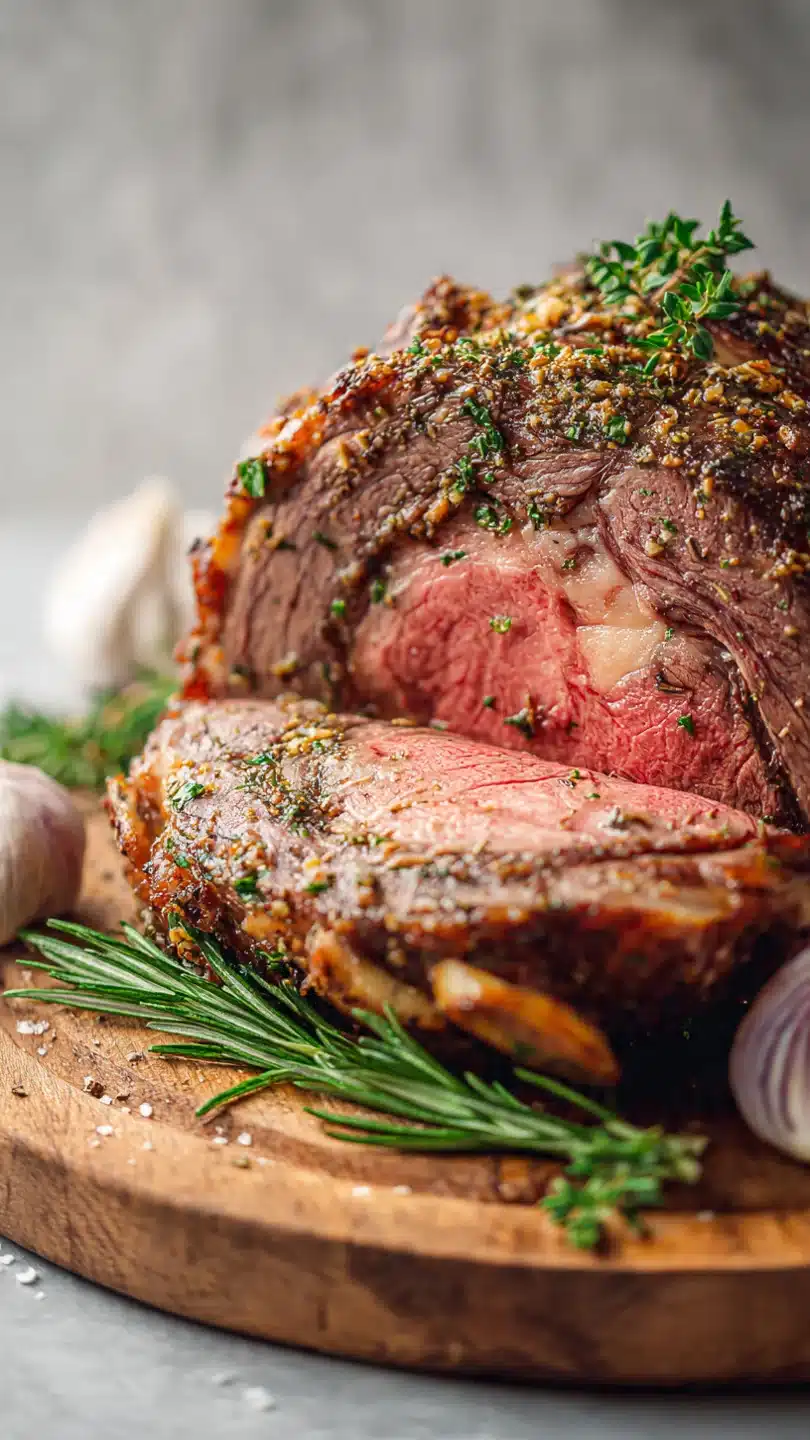
Once the roast reaches the desired temperature, remove it from the oven and tent loosely with foil. Let it rest for at least 20 minutes to allow the juices to redistribute. Now comes the fun part—slice and serve, stepping back to admire the perfect pink center and flavorful crust.
Pro tip: Always let your prime rib come to room temperature before roasting. This ensures even cooking throughout the roast. Temperature matters: Use a reliable meat thermometer to monitor the internal temperature. This prevents overcooking and ensures the perfect doneness. Resting time is crucial: Allowing the roast to rest after cooking redistributes the juices, resulting in a more tender and flavorful prime rib. Avoid common mistakes: Don’t open the oven door during the initial sear or while roasting at the lower temperature. This helps maintain a consistent cooking environment. Visual cues: Look for a nicely browned crust on the outside as an indicator that the sear is complete. The internal color should be pink for medium-rare, which is ideal for prime rib.Recipe Variations & Customizations
- Herb Infusion: Experiment with different herbs like basil or sage for a unique flavor profile. Fresh herbs always provide the best taste, but dried can be used in a pinch.
What to Serve With This Recipe
Garlic Herb Prime Rib pairs wonderfully with a variety of sides and beverages. Consider serving it with roasted vegetables like carrots and parsnips, which complement the rich flavors of the roast. For a classic touch, creamy mashed potatoes or a hearty Yorkshire pudding are excellent choices.
A simple green salad with a vinaigrette dressing can balance the richness of the meal. For beverages, a robust red wine like Cabernet Sauvignon or a full-bodied Pinot Noir will enhance the dining experience. This dish is perfect for holiday feasts, special occasions, or an indulgent Sunday dinner.
Storage & Make-Ahead Instructions
- Store any leftover prime rib in an airtight container in the refrigerator for up to 3 days. For longer storage, wrap tightly in foil or plastic wrap and freeze for up to 3 months. To reheat, let the roast come to room temperature, then warm in a low oven (250°F or 120°C) until heated through. Avoid microwaving, as it can dry out the meat. If you’re planning to make this ahead, prepare the garlic herb rub and apply it to the roast up to 24 hours in advance. Refrigerate until ready to cook, then let it come to room temperature before roasting. To check if it’s still good, ensure there’s no off smell or slimy texture.
Nutritional Benefits
- Prime rib is an excellent source of high-quality protein, essential for muscle growth and repair. It also contains beneficial fats that support overall health. The garlic in this recipe provides antioxidants and may have heart health benefits. The herbs add flavor without significant calories, making this dish suitable for keto and low-carb diets.
Frequently Asked Questions
Q: Can I make this ahead of time?
Yes, you can prepare the garlic herb rub and apply it to the roast up to 24 hours in advance. Refrigerate until ready to cook, then let it come to room temperature before roasting.
Q: What can I substitute for fresh herbs?
If fresh herbs are unavailable, you can use dried herbs. Reduce the quantity by half, as dried herbs are more potent.
Q: How do I know when the prime rib is done?
Use a meat thermometer to check the internal temperature. Aim for 120°F (49°C) for rare, 130°F (54°C) for medium-rare, or 140°F (60°C) for medium.
Q: Can I freeze leftover prime rib?
Yes, wrap the cooled prime rib tightly in foil or plastic wrap and freeze for up to 3 months. Thaw in the refrigerator before reheating.
Q: How can I adjust the flavor?
You can add different herbs, spices, or even a bit of mustard to the rub to customize the flavor to your liking.
Q: What if I don’t have a roasting rack?
You can use a makeshift rack by placing vegetables or crumpled foil in the bottom of the roasting pan to elevate the roast.
Q: How do I prevent the prime rib from drying out?
Ensure you let the roast rest after cooking, and avoid overcooking by using a meat thermometer to monitor the internal temperature.
Recipe Origin or History
Prime rib has a rich history, often associated with special occasions and holiday feasts. Traditionally, it’s a centerpiece dish meant to impress and satisfy. This Garlic Herb Prime Rib recipe adds a modern twist with the flavorful herb rub, enhancing the classic roast with contemporary flavors.
Final Thoughts
This Garlic Herb Prime Rib recipe is special because it combines simplicity with gourmet appeal, making it perfect for both novice and experienced cooks. The succulent, juicy roast with its flavorful crust is sure to be a hit at your next gathering. I encourage you to give it a try and enjoy the impressive results.
Don’t forget to share your feedback and ratings, and feel free to share this recipe on social media. As a final serving tip, consider presenting the roast on a platter with fresh herbs and garlic cloves for an elegant touch. Explore more of my recipes for delicious inspiration!
Garlic Herb Prime Rib
Ingredients
Equipment
Method
- Preheat your oven to 450°F (230°C). While the oven heats, prepare the garlic herb rub by mixing the minced garlic, chopped rosemary, thyme, olive oil, salt, and pepper in a small bowl until well combined.
- Place the prime rib roast, fat side up, on a roasting rack in a roasting pan. Using your hands, generously rub the garlic herb mixture all over the roast, ensuring it’s evenly coated. Trust me, this step is crucial for flavor infusion.
- Insert a meat thermometer into the thickest part of the roast, avoiding the bone. Place the roast in the preheated oven and cook at 450°F (230°C) for 15 minutes to sear the outside.
- After 15 minutes, reduce the oven temperature to 325°F (165°C) without opening the door. Continue roasting until the internal temperature reaches your desired doneness: 120°F (49°C) for rare, 130°F (54°C) for medium-rare, or 140°F (60°C) for medium. This should take about 15-20 minutes per pound.
- Once the roast reaches the desired temperature, remove it from the oven and tent loosely with foil. Let it rest for at least 20 minutes to allow the juices to redistribute. Slice and serve, admiring the perfect pink center and flavorful crust.


