
Boneless Prime Rib Recipe –
- Juicy and Tender: This boneless prime rib recipe ensures a succulent roast every time, thanks to the high-low temperature cooking method.
- Flavorful Seasoning: The herb and garlic paste infuses the meat with rich flavors, enhancing the natural taste of the prime rib.
- Special Occasion Worthy: Perfect for holidays or celebrations, this dish impresses with its elegance and taste.
- Easy to Prepare: Despite its gourmet appeal, the recipe is straightforward, requiring minimal prep work.
- Versatile Serving Options: Serve it as the star of your meal or slice it for sandwiches and salads.
Ingredients You’ll Need
Let’s gather our ingredients—these simple pantry staples create magic together to produce a stunning boneless prime rib.
For the Roast:- Boneless prime rib roast: About 4-5 pounds, the star of our dish.
- Garlic: 4 cloves, minced, to add depth and aroma.
- Fresh rosemary: 2 tablespoons, finely chopped, for that distinctive herbaceous note.
- Fresh thyme: 2 tablespoons, finely chopped, to complement the rosemary.
- Kosher salt: 1 tablespoon, to season and enhance flavors.
- Black pepper: 1 teaspoon, freshly ground, for a subtle kick.
- Olive oil: 2 tablespoons, to help the seasoning adhere and add richness.
When selecting your prime rib, look for good marbling, which will contribute to a tender and juicy roast. If fresh herbs are unavailable, dried herbs can be used, but reduce the quantity to a third of the fresh amount. For the best results, choose a high-quality roast from a trusted butcher or meat counter.

Note: You’ll find the complete list of ingredients, along with their exact measurements, in the printable recipe card at the bottom of this post.
Kitchen Equipment Needed
- Oven: For roasting the prime rib to perfection.
- Roasting pan with rack: Allows air to circulate around the roast for even cooking.
- Meat thermometer: Essential for monitoring the internal temperature and ensuring your desired doneness.
- Small bowl: To mix the seasoning paste.
- Mixing spoon: For blending the herb and garlic paste.
How to Make Boneless Prime Rib Recipe
Step 1: Preheat and Prepare
Preheat your oven to 450°F (230°C). Trust me, this high initial temperature is crucial for searing the roast and locking in those delicious juices. While the oven heats, prepare your seasoning paste by mixing minced garlic, chopped rosemary, thyme, salt, pepper, and olive oil in a small bowl.
Step 2: Season the Roast
Rub the herb and garlic paste all over the prime rib, ensuring every inch is coated. Believe me, this step infuses the roast with incredible flavor. Place the seasoned roast on a rack in a roasting pan, fat side up.
Tip from me: Insert a meat thermometer into the thickest part of the roast to monitor its temperature accurately.
Step 3: Roast at High Heat
Roast the prime rib at 450°F (230°C) for 15 minutes. This initial high heat creates a beautiful crust on the outside while keeping the inside tender. After 15 minutes, reduce the oven temperature to 325°F (160°C).
Now comes the fun part: watching your roast cook to perfection.
Step 4: Cook to Desired Doneness
Continue cooking the roast at 325°F (160°C) until it reaches your desired internal temperature: 120°F (49°C) for rare, 130°F (54°C) for medium-rare, or 140°F (60°C) for medium. Keep an eye on the thermometer, and you’ll be rewarded with a perfectly cooked prime rib.
Step 5: Rest and Serve
Once the roast reaches your desired temperature, remove it from the oven and tent it loosely with foil. Let it rest for at least 20 minutes. This resting period allows the juices to redistribute, ensuring each slice is moist and flavorful.
Step back and admire your masterpiece before slicing and serving.
Pro tip: To ensure a beautifully browned crust, do not open the oven door during the initial high-heat roasting phase. The consistent heat is key to achieving that perfect sear. Temperature matters: Use a meat thermometer to monitor the internal temperature accurately. Remember, the roast’s temperature will continue to rise slightly during the resting period. Resting is crucial: Always let your prime rib rest before slicing. This step prevents juice loss and ensures a tender, juicy result. Common mistake to avoid: Don’t rush to carve the roast immediately after cooking. Patience is key for the best outcome.Recipe Variations & Customizations
- Herb Infusion: Add fresh herbs like basil or sage to the seasoning paste for a different flavor profile.
What to Serve With This Recipe
Boneless prime rib pairs wonderfully with a variety of sides and beverages. Consider serving it with roasted vegetables like carrots, potatoes, and Brussels sprouts for a classic holiday meal. For a lighter option, a fresh green salad with a vinaigrette dressing complements the rich flavors of the roast.
Pair this dish with a robust red wine like Cabernet Sauvignon or a full-bodied Pinot Noir to enhance the dining experience. For special occasions, add a creamy horseradish sauce or a red wine reduction for an extra touch of elegance.
Storage & Make-Ahead Instructions
- Store any leftover prime rib in an airtight container in the refrigerator for up to 3 days. For longer storage, wrap the roast tightly in plastic wrap and aluminum foil, then freeze for up to 3 months. To reheat, let the roast thaw in the refrigerator overnight, then warm it in a 250°F (120°C) oven until heated through. Avoid microwaving the roast, as it can dry out the meat. If you’re planning to make this ahead, you can season the roast up to a day in advance and let it sit in the refrigerator to marinate. Just be sure to bring it to room temperature before roasting for the best results.
Nutritional Benefits
- Boneless prime rib is an excellent source of high-quality protein, essential for muscle growth and repair. The olive oil used in the seasoning paste provides healthy monounsaturated fats, which are beneficial for heart health. Additionally, the herbs used in this recipe, such as rosemary and thyme, contain antioxidants that can help reduce inflammation and support overall health.
Frequently Asked Questions
Q: Can I make this boneless prime rib ahead of time?
Yes, you can season the roast up to a day in advance and let it marinate in the refrigerator. Just bring it to room temperature before cooking for the best results.
Q: What can I use as a substitute for fresh herbs?
If fresh herbs are unavailable, you can use dried herbs. Use about a third of the quantity specified for fresh herbs.
Q: How do I know when the prime rib is done?
Use a meat thermometer to check the internal temperature. Aim for 120°F (49°C) for rare, 130°F (54°C) for medium-rare, or 140°F (60°C) for medium.
Q: Can I freeze leftover prime rib?
Yes, wrap the cooled roast tightly in plastic wrap and aluminum foil, then freeze for up to 3 months. Thaw in the refrigerator before reheating.
Q: What’s the best way to reheat prime rib?
To reheat, let the roast thaw in the refrigerator overnight, then warm it in a 250°F (120°C) oven until heated through. Avoid using a microwave to prevent drying out the meat.
Q: Can I adjust the seasoning to suit my taste?
Absolutely, feel free to adjust the amounts of salt, pepper, and herbs to your preference. You can also add other seasonings like paprika or mustard for a different flavor profile.
Q: What’s the secret to a juicy prime rib?
The secret lies in the high-low temperature roasting method and allowing the roast to rest after cooking. This helps lock in the juices and ensures a tender result.
Recipe Origin or History
The prime rib roast has a rich history, often associated with celebratory meals and special occasions. Traditionally, it was a centerpiece for holiday feasts, particularly during Christmas and New Year’s celebrations. While the classic version is often bone-in, this boneless variation offers the same luxurious taste with added convenience.
My personal connection to this recipe stems from years of perfecting it in professional kitchens and sharing it with family and friends during festive gatherings.
Final Thoughts
This boneless prime rib recipe is a testament to the joy of cooking and the pleasure of sharing a delicious meal. The combination of a high-low temperature roasting method and a flavorful herb and garlic paste ensures a juicy, tender roast that’s perfect for any special occasion. Whether you’re hosting a holiday dinner or simply treating yourself to a gourmet meal, this recipe is sure to impress.
I encourage you to try it and share your results with me. Don’t forget to rate the recipe and share it on social media. Enjoy your prime rib with a glass of your favorite red wine, and savor every bite of this culinary delight.
Explore more recipes on my blog and keep cooking with confidence!
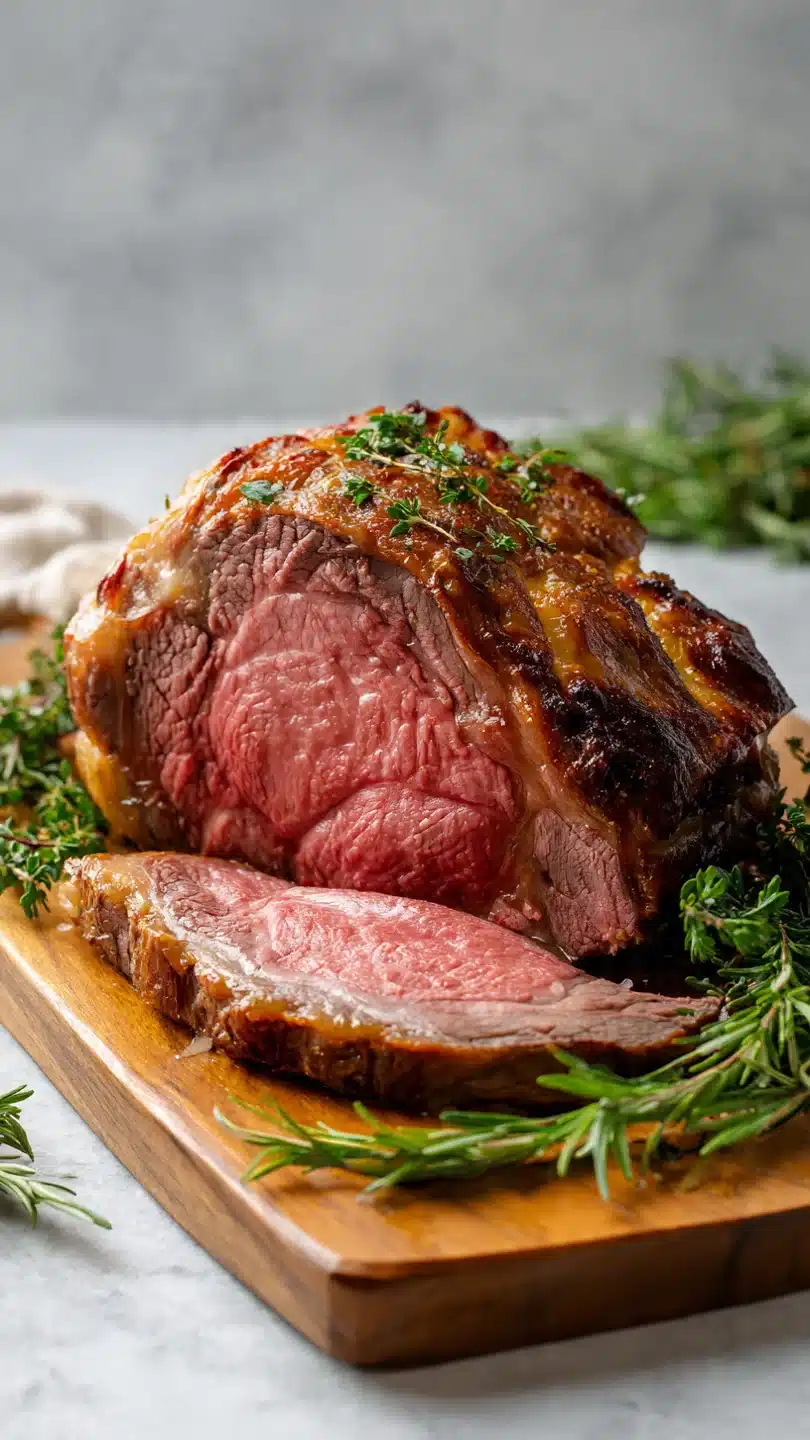
Boneless Prime Rib
Ingredients
Equipment
Method
- Preheat your oven to 450°F (230°C). This high initial temperature helps to sear the roast and lock in the juices.
- In a small bowl, mix together the minced garlic, chopped rosemary, thyme, salt, pepper, and olive oil to create a paste. Rub this mixture all over the prime rib, ensuring it’s evenly coated.
- Place the seasoned roast on a rack in a roasting pan, fat side up. Insert a meat thermometer into the thickest part of the roast, avoiding the bone if it’s present.
- Roast the prime rib at 450°F (230°C) for 15 minutes to achieve a nice crust. Then, reduce the oven temperature to 325°F (160°C) and continue cooking until the internal temperature reaches your desired doneness: 120°F (49°C) for rare, 130°F (54°C) for medium-rare, or 140°F (60°C) for medium.
- Remove the roast from the oven and tent it loosely with foil. Let it rest for at least 20 minutes to allow the juices to redistribute. Slice and serve.


