
How To Cook A Boneless Prime Rib Roast
Imagine the aroma of a perfectly cooked boneless prime rib roast filling your kitchen. The rich, tender meat with a beautifully seared crust is a showstopper at any dinner table, perfect for holiday gatherings or special occasions. In this guide, I’ll share my tried-and-true method for achieving that ideal roast, along with the science behind each step to ensure you get it right every time.
- Succulent and Juicy: The high-low temperature method ensures a tender, moist interior.
- Flavorful Crust: The herb and garlic rub creates a deliciously seasoned exterior.
- Impressive Presentation: Perfect for special occasions and holiday feasts.
- Simple Ingredients: Uses basic pantry staples for a gourmet result.
- Customizable: Easily adjust the seasoning to suit your taste preferences.
Ingredients You’ll Need
Let’s gather our ingredients—these simple pantry staples create magic together to elevate your boneless prime rib roast.
- Boneless prime rib roast: Choose a 4-5 pound roast for this recipe. Look for well-marbled meat for the best flavor and tenderness.
- Olive oil: This helps the seasoning stick to the meat and adds a subtle richness.
- Kosher salt: Enhances the natural flavors of the meat.
- Black pepper: Freshly ground pepper adds a nice kick.
- Garlic: Mincing fresh garlic ensures potent flavor in every bite.
- Fresh rosemary: This herb adds a fragrant, earthy note.
- Fresh thyme: Thyme complements the rosemary and adds depth to the seasoning.
For the best results, choose high-quality ingredients. If fresh herbs are unavailable, dried herbs can be used, but reduce the quantity by half.

Note: You’ll find the complete list of ingredients, along with their exact measurements, in the printable recipe card at the bottom of this post.
Kitchen Equipment Needed
To cook your boneless prime rib roast, you’ll need the following equipment:
- Oven: Preheat to the specified temperatures for perfect cooking.
- Roasting pan with rack: Elevates the roast for even cooking and crisping.
- Meat thermometer: Essential for monitoring the internal temperature.
- Small bowl: For mixing the herb and garlic rub.
- Basting brush or spoon: To apply the seasoning evenly.
How to Make Boneless Prime Rib Roast Recipe
Step 1: Prepare the Roast
Start by preheating your oven to 450°F (230°C). Let the roast sit at room temperature for about an hour before cooking. This helps ensure even cooking throughout.
Trust me, this step makes a big difference in achieving that perfect roast.
Step 2: Season the Roast
In a small bowl, mix olive oil, kosher salt, black pepper, minced garlic, rosemary, and thyme to create a paste. Rub this mixture all over the roast, making sure it’s evenly coated. This seasoning not only adds flavor but also helps form a delicious crust.
Step 3: Sear and Roast
Place the seasoned roast on a rack in a roasting pan, fat side up. Insert a meat thermometer into the thickest part of the roast. Roast at 450°F (230°C) for 15 minutes to sear the outside, then reduce the oven temperature to 325°F (160°C).
Believe me, this initial high heat is key to that beautiful crust.
Step 4: Monitor and Cook
Continue roasting at the lower temperature until the internal temperature reaches your desired doneness: 120°F (49°C) for rare, 130°F (54°C) for medium-rare, or 140°F (60°C) for medium. Use the meat thermometer to monitor the temperature closely. Tip from me: don’t rush this step; slow and steady wins the race.
Step 5: Rest and Serve
Once the roast reaches the desired temperature, remove it from the oven and tent loosely with foil. Let it rest for 20-30 minutes before slicing. This resting period allows the juices to redistribute, ensuring a moist, flavorful roast.
Now comes the fun part: slice, serve, and enjoy your masterpiece!
Pro tip: To ensure a perfectly cooked roast, always use a meat thermometer. Insert it into the thickest part of the meat, avoiding the bone if present, to get an accurate reading. Temperature matters: The high-low temperature method is crucial. The initial high heat sears the roast, creating a flavorful crust, while the lower temperature cooks the interior gently, preserving its tenderness. Resting is key: Never skip the resting period. It allows the juices to redistribute, ensuring each slice is moist and delicious. Aim for at least 20 minutes of rest time. Avoid common mistakes: Don’t open the oven door frequently, as this can cause temperature fluctuations and affect the cooking time. Trust the process and let the roast do its thing.Recipe Variations & Customizations
- Herb Infusion: Add fresh herbs like basil, oregano, or sage to the seasoning mix for a different flavor profile. Experiment with what you have on hand.
What to Serve With This Recipe
A boneless prime rib roast pairs wonderfully with a variety of sides and beverages. Consider serving it with roasted vegetables like carrots, potatoes, and Brussels sprouts for a hearty meal. A creamy horseradish sauce or red wine reduction sauce can complement the rich flavors of the roast.
For beverages, a full-bodied red wine like Cabernet Sauvignon or a robust Pinot Noir would be an excellent choice. This dish is perfect for holiday dinners, special occasions, or any time you want to impress your guests.
Storage & Make-Ahead Instructions
- Store any leftover boneless prime rib roast in an airtight container in the refrigerator for up to 3 days. For longer storage, wrap the roast tightly in foil or plastic wrap and freeze for up to 3 months. To reheat, let the roast thaw in the refrigerator overnight, then warm it in a 250°F (120°C) oven until heated through. Avoid reheating in the microwave, as it can dry out the meat. If you’re planning to make this roast ahead of time, you can season it and let it marinate in the refrigerator for up to 24 hours before cooking. Just be sure to bring it to room temperature before roasting.
Nutritional Benefits
- Boneless prime rib roast is high in protein, essential for muscle growth and repair. It also contains healthy fats, which can support heart health when consumed in moderation. This recipe is keto-friendly and low-carb, making it a great option for those following specific dietary plans.
Frequently Asked Questions
Q: Can I make this ahead of time?
Yes, you can season the roast and let it marinate in the refrigerator for up to 24 hours before cooking. Just bring it to room temperature before roasting.
Q: Can I use a different cut of beef?
While prime rib is ideal, you can use a similar cut like a rib-eye roast. Adjust the cooking time based on the size and thickness of the meat.
Q: How do I know when the roast is done?
Use a meat thermometer to check the internal temperature. Aim for 120°F (49°C) for rare, 130°F (54°C) for medium-rare, or 140°F (60°C) for medium.
Q: Can I freeze leftovers?
Yes, wrap the cooled roast tightly in foil or plastic wrap and freeze for up to 3 months. Thaw in the refrigerator before reheating.
Q: What if I don’t have fresh herbs?
Dried herbs can be used as a substitute. Use half the amount specified for fresh herbs, as they are more concentrated.
Q: Can I adjust the seasoning?
Absolutely! Feel free to add or reduce the herbs, garlic, and spices to suit your taste preferences.
Q: How can I prevent the roast from drying out?
Ensure you don’t overcook the roast, and always let it rest before slicing. This helps retain moisture.
Recipe Origin or History
The prime rib roast has its roots in traditional British cuisine, often served as a centerpiece for special occasions. Over time, it has become a beloved dish in American holiday meals, prized for its rich flavor and tender texture. This recipe combines classic techniques with modern flavors to create a dish that honors its heritage while appealing to contemporary palates.
Final Thoughts
Cooking a boneless prime rib roast is an art that combines time-honored techniques with a bit of culinary science. This recipe is special because it delivers a succulent roast with a flavorful crust, perfect for impressing your guests at holiday gatherings or special dinners. The ease of preparation, combined with the gourmet results, makes it a must-try.
I encourage you to give it a go, and don’t forget to share your experience and rate the recipe. Happy cooking, and enjoy every delicious bite!
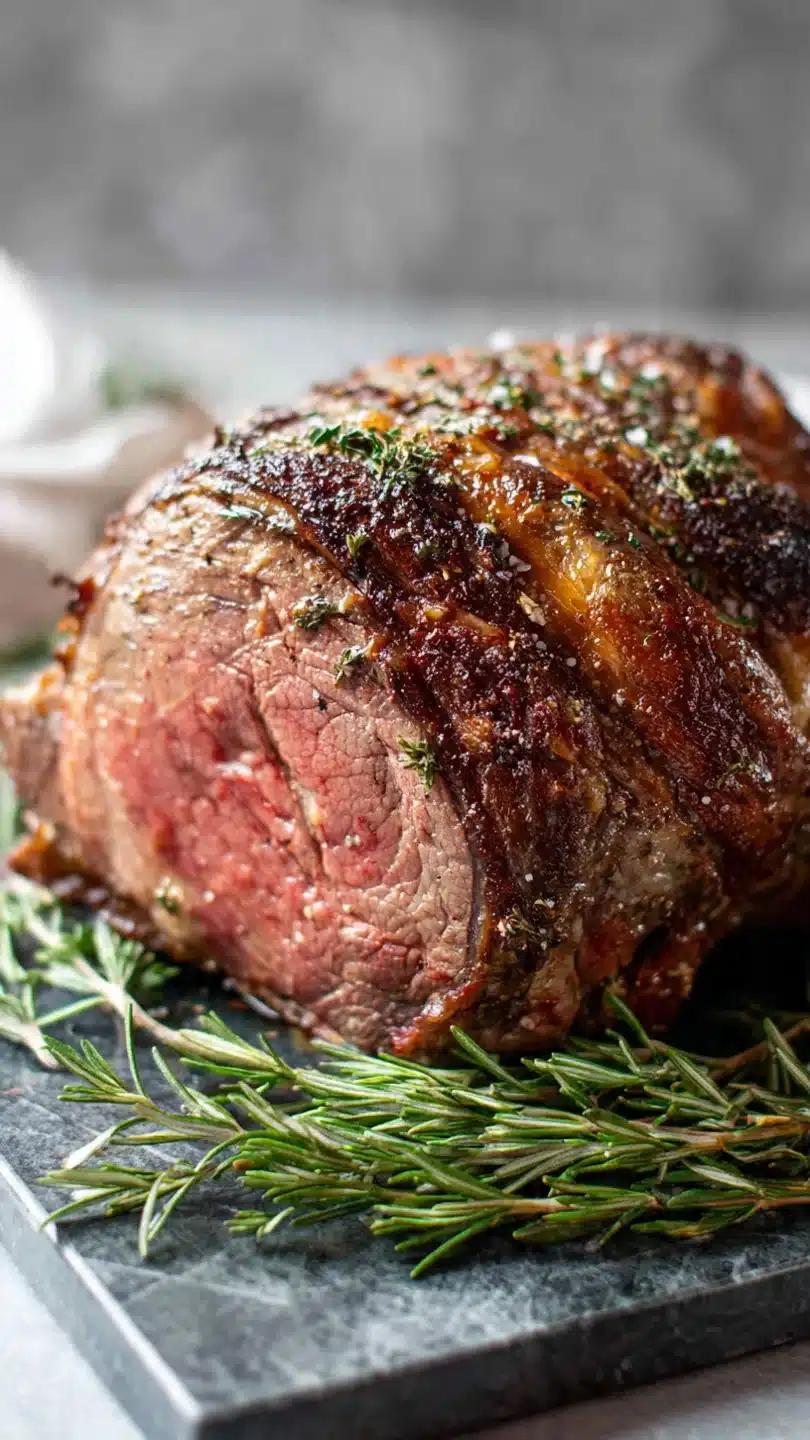
Boneless Prime Rib Roast
Ingredients
Equipment
Method
- Preheat your oven to 450°F (230°C). Remove the roast from the refrigerator and let it sit at room temperature for about an hour to ensure even cooking.
- In a small bowl, mix the olive oil, salt, pepper, garlic, rosemary, and thyme to create a paste. Rub this mixture all over the roast, ensuring it’s evenly coated.
- Place the roast on a rack in a roasting pan, fat side up. Insert a meat thermometer into the thickest part of the roast, avoiding the bone if there is one.
- Roast the prime rib at 450°F (230°C) for 15 minutes to sear the outside. Then, reduce the oven temperature to 325°F (160°C) and continue cooking until the internal temperature reaches your desired doneness: 120°F (49°C) for rare, 130°F (54°C) for medium-rare, or 140°F (60°C) for medium.
- Remove the roast from the oven and tent loosely with foil. Let it rest for 20-30 minutes before slicing. This allows the juices to redistribute, ensuring a moist roast. Slice and serve with your favorite sides.


