
The Ultimate Easy Prime Rib
- Easy to Prepare: With minimal ingredients and simple steps, you can create a restaurant-quality meal at home.
- Juicy and Flavorful: The high-heat sear and herb rub ensure a delicious crust with a tender, juicy interior.
- Perfect for Special Occasions: Impress your guests with this show-stopping centerpiece that’s surprisingly easy to make.
- Customizable: Adjust the doneness to your preference, from rare to medium.
- Minimal Active Time: Once in the oven, it requires little attention, freeing you up to focus on other dishes or enjoy your company.
Ingredients You’ll Need
Let’s gather our ingredients—these simple pantry staples create magic together to transform a prime rib roast into a culinary masterpiece.
- Prime rib roast: Choose a bone-in roast for the best flavor and presentation. Aim for about 6 pounds to serve 6 people.
- Garlic: Fresh garlic adds a robust, aromatic flavor to the roast. Mince it finely for even distribution.
- Rosemary and thyme: These herbs infuse the meat with a delightful, earthy aroma. Fresh is best, but dried can be used in a pinch.
- Olive oil: Helps the herb and garlic mixture adhere to the roast and adds richness.
- Kosher salt and black pepper: Essential for seasoning and enhancing the natural flavors of the meat.
For the best results, opt for high-quality ingredients. If you can’t find fresh herbs, look for them in the produce section of your local grocery store or consider growing your own.

Note: You’ll find the complete list of ingredients, along with their exact measurements, in the printable recipe card at the bottom of this post.
Kitchen Equipment Needed
- Roasting pan: A sturdy pan that can withstand high oven temperatures is essential for cooking the prime rib.
- Meat thermometer: Critical for ensuring the roast reaches your desired level of doneness.
- Aluminum foil: Used to tent the roast during the resting period, helping retain heat and moisture.
How to Make The Ultimate Easy Prime Rib Recipe
Step 1: Prepare the Roast
Start by letting your prime rib sit at room temperature for about 2 hours. This step is crucial for even cooking. Trust me, it makes a difference!
While it’s resting, preheat your oven to 450°F. Mix your garlic, herbs, olive oil, salt, and pepper into a paste and rub it all over the roast. Believe me, this flavor-packed rub is the secret to a delicious crust.
Step 2: Sear and Roast
Place your seasoned prime rib in a roasting pan, fat side up. Pop it into the preheated oven for a 15-minute sear at 450°F. This high heat creates a beautiful, caramelized crust.
After searing, reduce the oven temperature to 325°F and continue roasting. Tip from me: use a meat thermometer to monitor the internal temperature for perfect doneness.
Step 3: Check for Doneness
Roast until the internal temperature reaches your preferred doneness: 120°F for rare, 130°F for medium-rare, or 140°F for medium. This should take about 15-20 minutes per pound. Keep an eye on the thermometer and remove the roast when it’s just shy of your target temperature, as it will continue to cook during the resting period.
Step 4: Rest and Carve
Once the roast is done, remove it from the oven and tent loosely with foil. Now comes the fun part—let it rest for 20-30 minutes. This resting period is key for juicy results.
Step back and admire your masterpiece while the juices redistribute throughout the meat. Then, carve and serve to delighted guests.
Step 5: Serve and Enjoy
Present your perfectly cooked prime rib on a platter, garnished with fresh herbs if desired. Serve with horseradish sauce or au jus for an extra touch of elegance. Enjoy the compliments as you savor each tender, flavorful bite.
Pro tip: For an even more flavorful crust, let the seasoned roast sit uncovered in the refrigerator overnight before cooking. This allows the flavors to penetrate deeper into the meat. Temperature matters: Use a meat thermometer to ensure accurate doneness. Remember, the roast will continue to cook as it rests, so remove it from the oven a few degrees below your target temperature. Resting is crucial: Don’t skip the resting period. It’s essential for juicy results. The roast’s internal temperature will rise about 5-10 degrees during this time. Avoid overcooking: Prime rib is best enjoyed rare to medium-rare. Overcooking can result in a dry, less flavorful roast.Recipe Variations & Customizations
- Herb Variations: Experiment with different herbs like sage or oregano to change the flavor profile. Fresh is best, but dried herbs can work in a pinch.
What to Serve With This Recipe
This prime rib pairs beautifully with a variety of sides. Consider roasted vegetables like carrots, parsnips, and Brussels sprouts for a colorful and nutritious accompaniment. Creamy mashed potatoes or a classic Yorkshire pudding can soak up the delicious juices.
For a lighter option, a crisp green salad with a vinaigrette dressing complements the richness of the roast. Don’t forget a bold red wine like Cabernet Sauvignon or Merlot to complete the meal. Perfect for holiday gatherings or special occasions, this dish is sure to impress.
Storage & Make-Ahead Instructions
- Store any leftover prime rib in an airtight container in the refrigerator for up to 3-4 days. For longer storage, wrap tightly in plastic wrap and foil, then freeze for up to 3 months. To reheat, let the roast come to room temperature, then warm in a low oven (250°F) until heated through. Avoid using a microwave, as it can dry out the meat.
To make ahead, season the roast and let it sit in the refrigerator overnight. The next day, bring it to room temperature before roasting. This enhances flavor and simplifies your day-of preparations.
Nutritional Benefits
- Prime rib is an excellent source of high-quality protein, essential for muscle growth and repair. It also contains healthy fats, which are important for overall health and can help you feel full and satisfied. This dish is keto-friendly and low-carb, making it a great option for those following specific dietary plans.
Frequently Asked Questions
Q: Can I make this ahead of time?
Yes, you can season the roast and let it sit in the refrigerator overnight. This enhances flavor and simplifies your day-of preparations.
Q: What are some good substitutions for the herbs?
You can use dried herbs if fresh aren’t available, though fresh will provide the best flavor. Sage, oregano, or even a mix of Italian herbs can work well.
Q: How do I know when the prime rib is done?
Use a meat thermometer to check the internal temperature. Remove the roast from the oven at 120°F for rare, 130°F for medium-rare, or 140°F for medium.
Q: Can I freeze leftover prime rib?
Yes, wrap the cooled roast tightly in plastic wrap and foil, then freeze for up to 3 months. Thaw in the refrigerator before reheating.
Q: What if I don’t have a roasting pan?
A sturdy baking dish can work in a pinch. Just ensure it’s large enough to hold the roast and any drippings.
Q: How can I adjust the flavor of the herb rub?
Increase or decrease the amounts of garlic, herbs, or spices to suit your taste. You can also add other seasonings like smoked paprika or mustard powder.
Q: Can I use a boneless roast instead?
Yes, a boneless roast will work, though it may cook more quickly. Adjust the cooking time and use a meat thermometer to ensure doneness.
Recipe Origin or History
Prime rib has a rich history, originating in England as a special occasion dish. Traditionally served during holidays and celebrations, it’s become a beloved centerpiece in American cuisine as well. This recipe combines classic techniques with a simple, modern approach to bring out the best in this luxurious cut of beef.
Final Thoughts
This ultimate easy prime rib recipe is a game-changer for anyone looking to impress at their next dinner party or holiday gathering. The combination of a high-heat sear and low-temperature roast ensures a perfectly cooked, juicy roast every time. With minimal active time and simple ingredients, you can create a restaurant-quality meal at home.
Give it a try and let me know how it turns out! Don’t forget to share your results on social media and rate the recipe. And while you’re enjoying this delicious prime rib, consider exploring more of my recipes for your next culinary adventure.
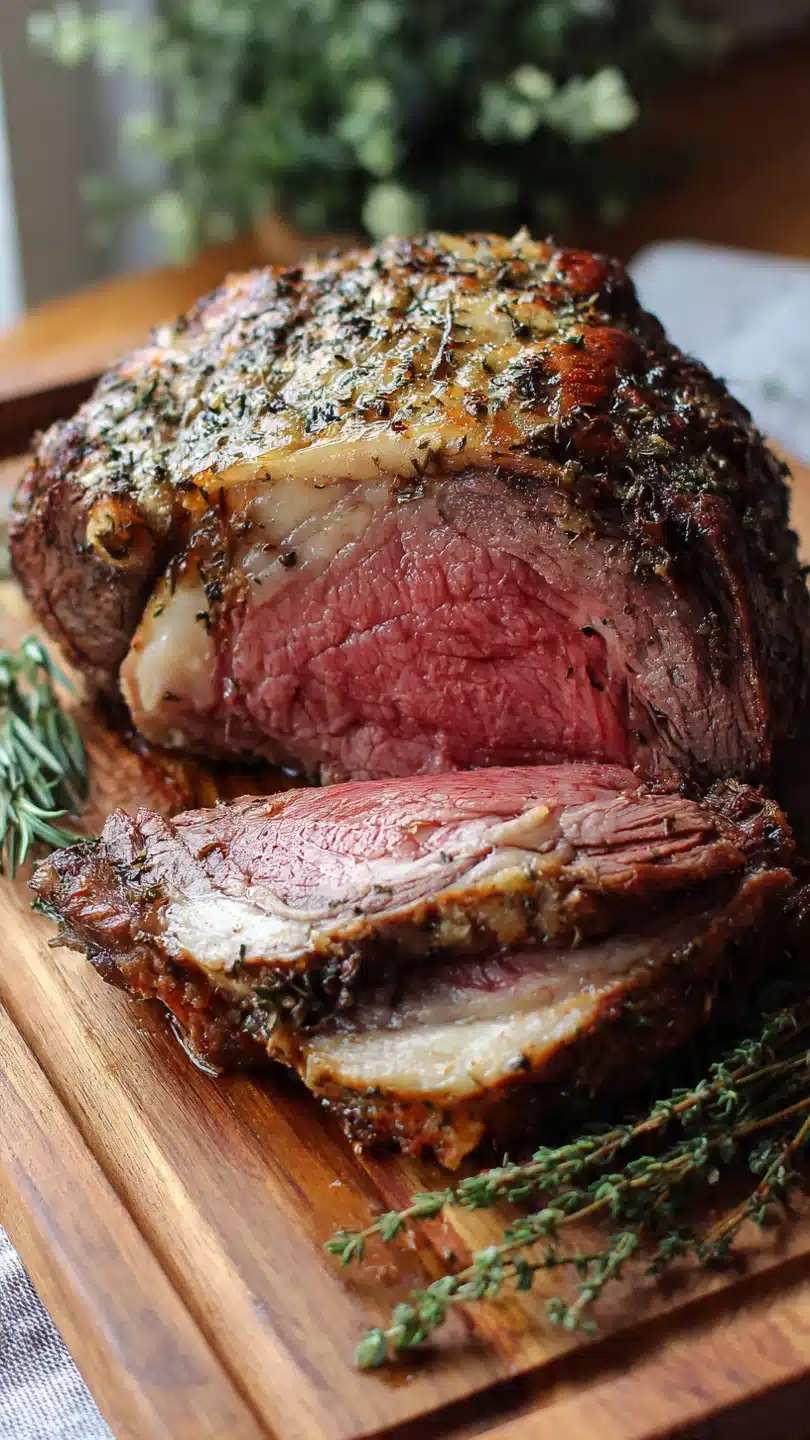
The Ultimate Easy Prime Rib
Ingredients
Equipment
Method
- Remove the prime rib from the refrigerator and let it sit at room temperature for about 2 hours before cooking. This helps ensure even cooking throughout the roast.
- Preheat your oven to 450°F (230°C). In a small bowl, mix the minced garlic, chopped rosemary, thyme, olive oil, salt, and pepper to create a paste. Rub this mixture all over the prime rib, ensuring it’s well coated.
- Place the prime rib, fat side up, in a roasting pan. Insert a meat thermometer into the thickest part of the roast, making sure it doesn’t touch bone. Roast at 450°F for 15 minutes to sear the outside.
- After 15 minutes, reduce the oven temperature to 325°F (165°C) and continue roasting until the internal temperature reaches your desired doneness: 120°F for rare, 130°F for medium-rare, or 140°F for medium. This should take about 15-20 minutes per pound.
- Once the roast reaches the desired temperature, remove it from the oven and tent loosely with foil. Let it rest for 20-30 minutes before carving. This resting period allows the juices to redistribute, ensuring a moist and tender roast.


