
low fiber soup recipes
When your digestive system needs a break, finding food that is both comforting and compliant can feel like a puzzle. As a chef, I’ve seen firsthand how the right bowl of soup can provide not just nourishment, but genuine relief. Low fiber soups aren’t about deprivation; they’re about crafting velvety, flavorful bowls that soothe from the inside out.
This collection focuses on three core recipes that are chef-tested to be gentle, easy to digest, and deeply satisfying. You can expect smooth textures, well-balanced flavors that avoid harsh spices, and results that feel like a hug in a bowl. Let’s create some kitchen magic that cares for you.
- Digestive Comfort: Designed with easily digestible ingredients and smooth textures to provide gentle nourishment without irritation.
- Maximized Flavor: Uses techniques like sweating aromatics and strategic seasoning to build depth of taste without relying on fibrous vegetables or spices.
- Simple & Fast: Most soups come together with under 15 minutes of active prep and about 30 minutes of cooking, perfect for when energy is low.
- Highly Adaptable: Each recipe includes tested variations for different dietary needs (dairy-free, vegan) and flavor preferences.
- Perfect for Meal Prep: These soups store and reheat beautifully, making it easy to have comforting meals ready throughout the week.
- Chef-Approved Texture: Instructions ensure a perfectly smooth, lump-free consistency every time, which is the cornerstone of a low-fiber soup.
Ingredients You’ll Need
Let’s gather our ingredients for this creamy butternut squash soup—the star of our low-fiber collection. The beauty here is in the simplicity. We’re using vegetables that become meltingly tender when cooked and blended, healthy fats for richness, and aromatic accents that add flavor without bulk.
Butternut squash is our main ingredient; its natural sweetness and low fiber content (when peeled and seeded properly) make it ideal. I recommend using fresh ginger rather than dried—its bright, warm note cuts through the richness without any gritty texture. For the liquid, a good-quality low-sodium broth is key; you control the salt.
Finally, the heavy cream or coconut milk adds that luxurious, velvety mouthfeel that defines a great pureed soup. If you can’t find fresh squash, frozen cubed butternut squash is a fantastic, time-saving alternative that works just as well.

Note: You’ll find the complete list of ingredients, along with their exact measurements, in the printable recipe card at the bottom of this post.
Kitchen Equipment Needed
You don’t need any specialty gear. A large pot or Dutch oven is essential for even cooking. The most important tool is a high-powered blender to achieve that restaurant-smooth consistency; an immersion blender can work, but a countertop blender gives a finer result.
For ultimate smoothness, a fine-mesh sieve is a pro trick to catch any stray fibers. You’ll also need a sharp knife and sturdy vegetable peeler to prep the squash safely and efficiently. A microplane or fine grater is perfect for the ginger and ensures no stringy bits remain.
How to Make Creamy Butternut Squash & Ginger Soup Recipe
Step 1: Build the Flavor Base
In your large pot, we start by gently cooking the aromatics. Melt the butter over medium heat—you want it to foam but not brown. Add the finely chopped onion.
Here’s a pro move: cook them slowly until they’re soft and sweet, about 5-7 minutes. We’re not looking for color, just tenderness. This process, called sweating, draws out the sugars.
Then, stir in the grated ginger. Believe me, that 60-second cook time wakes up the ginger’s essential oils, filling your kitchen with the most comforting aroma and laying a complex flavor foundation.
Step 2: Simmer to Tenderness
Now, add the star of the show: your cubed butternut squash. Pour in the broth—it should just cover the vegetables. Crank the heat to get a boil, then immediately dial it back to a gentle simmer.
Cover the pot. This is where patience pays off. Let it simmer for 20-25 minutes.
You’ll know it’s ready when a fork slides into a squash cube with absolutely no resistance. This slow cooking breaks down the squash’s structure completely, making it ready to transform into the silkiest puree.
Step 3: Create the Velvet Texture
This is the most critical step for a low-fiber result. Carefully ladle the hot squash and broth into your blender. Add the nutmeg.
Trust me, always put the lid on and hold it firmly with a kitchen towel—steam pressure is powerful. Blend on high for a full 1-2 minutes. You’re not just mixing; you’re mechanically breaking down every last fiber.
For patients on a strict low-residue diet, take the extra minute to pass the soup through a fine-mesh sieve back into the pot. It guarantees a flawless texture.
Step 4: Finish with Richness
Return your beautifully smooth soup to the pot over low heat. Now, stir in your chosen cream or coconut milk. This addition brings luxurious body and mellows any sharp edges.
Now, season. Tip from me: use white pepper instead of black. It blends in seamlessly and offers a gentler heat.
Season with salt gradually, tasting as you go. Warm the soup through for just 2-3 minutes—never let it boil after adding the dairy, or it might curdle.
Step 5: Garnish and Serve
Ladle the soup into warm bowls. This is the fun part where you make it look beautiful. A tiny drizzle of cream swirled on top or a microscopic dusting of nutmeg adds visual appeal.
Step back and admire the vibrant, creamy orange hue. Serve it immediately. The first spoonful should be warm, comforting, and impossibly smooth—a true testament to the care put into every step.
- Peeling is Paramount: For truly low-fiber soup, be meticulous when peeling the squash. Remove all of the tough, fibrous skin and the inner stringy membrane around the seeds. Any bits left behind will not blend smoothly.
- The Blending Safety Dance: Never fill your blender more than halfway with hot liquid. Blend in batches if needed. Always start on the lowest speed and gradually increase to high, holding the lid securely. This prevents dangerous steam explosions.
- Acidity is an Ally (Sometimes): For these specific low-fiber recipes, I avoid adding acidic ingredients like lemon juice or vinegar directly to the pot, as they can sometimes cause digestive discomfort. If a flavor lift is needed, a drop can be added to an individual serving bowl.
- Thickness Control: If your soup is too thick after blending, thin it with additional warm broth, 1/4 cup at a time. If it’s too thin, simmer it uncovered for a few extra minutes to reduce and concentrate the flavors.
Recipe Variations & Customizations
- Creamy Carrot & Coriander: Replace the butternut squash with 4 cups of peeled, sliced carrots. Swap the ginger for 1 teaspoon of ground coriander added with the onions. Finish with the cream and a handful of chopped fresh cilantro (if tolerated).
- Silken Potato Leek: Use 3 cups of peeled, diced Yukon Gold potatoes and 1 cup of the white/light green part of leeks, thoroughly washed and sliced. Omit the ginger and nutmeg. Finish with cream and a garnish of fresh chives.
- Dairy-Free & Vegan: Use olive oil to sauté, vegetable broth, and full-fat coconut milk for the cream. The coconut flavor pairs wonderfully with the squash and ginger.
- Protein Boost: For added nutrition, stir in 1/2 cup of pureed white beans (cannellini or navy) during the blending stage. They add creaminess and protein without noticeable texture.
- Herb-Infused: For a more savory profile, add a few sprigs of fresh thyme or sage to the pot while the squash simmers. Remove them before blending.
What to Serve With This Recipe
This soup is a complete, comforting meal on its own. For a more substantial plate, pair it with simple, low-fiber sides. Soft, white dinner rolls or saltine crackers are classic companions for dipping.
For a protein addition, a side of scrambled eggs or plain, shredded chicken breast works beautifully. If you’re serving it as part of a multi-course meal for someone with fewer restrictions, follow it with a simple baked fish or skinless chicken. Beverage-wise, stick with gentle options like water, herbal tea (like chamomile or peppermint), or apple juice.
Avoid carbonated drinks or citrus juices which can be irritating.
Storage & Make-Ahead Instructions
- Refrigerator: Allow the soup to cool completely before transferring to airtight containers. It will keep for up to 3 days in the refrigerator.
- Freezer: This soup freezes exceptionally well for up to 2 months. Freeze in portion-sized containers for easy thawing. Leave about 1/2 inch of headspace for expansion.
- Reheating: Thaw frozen soup overnight in the fridge. Reheat gently in a saucepan over medium-low heat, stirring frequently. You may need to add a small splash of broth or water to adjust consistency after thawing.
- Make-Ahead: You can fully prepare this soup 1-2 days in advance. I often recommend making a double batch and freezing half for a future effortless meal. The flavors often improve after a day in the fridge.
Frequently Asked Questions
Q: Can I use frozen vegetables for these soups?
Absolutely. Frozen peeled and cubed butternut squash, chopped carrots, or spinach (for the creamy version) are excellent, time-saving choices. They are often flash-frozen at peak freshness and require no prep.
Use them straight from the freezer, adding a minute or two to the simmering time.
Q: My soup turned out too thin. How can I thicken it?
The best way to thicken a pureed soup without adding fiber is to simmer it uncovered for an additional 5-10 minutes. This allows excess water to evaporate, concentrating the flavors and thickening the texture naturally. Avoid using flour or cornstarch, which can create lumps and alter the clean flavor profile.
Q: Is it safe to blend hot soup?
Yes, but caution is crucial. Never fill the blender jar more than halfway. Secure the lid tightly and place a folded kitchen towel over the top, holding it down firmly.
Start on the lowest speed and gradually increase. Alternatively, let the soup cool for 15-20 minutes before blending, though this adds to your total time.
Q: Can I make these soups in an Instant Pot or pressure cooker?
Yes, you can. Use the sauté function for the onion and ginger. Add the squash and broth, then pressure cook on high for 8-10 minutes.
Allow a natural pressure release for 10 minutes, then quick-release any remaining pressure. Blend and finish as directed.
Q: What’s the difference between a low-fiber and a full-liquid diet?
A low-fiber diet includes smooth, soft solids like well-cooked, pureed vegetables and tender meats. A full-liquid diet consists only of liquids you can pour (broth, juice, strained cream soups). These recipes are designed for a low-fiber diet but can be strained to be suitable for full-liquid if necessary.
Q: Why shouldn’t I use a food processor instead of a blender?
Food processors are designed to chop, not puree to a perfectly smooth liquid. They will leave the soup slightly grainy and may not process hot liquids safely due to venting issues. A blender is the superior tool for achieving the necessary velvety texture.
Q: Can I add cheese to these soups?
For strict digestive rest, it’s best to avoid aged cheeses. If tolerated, a small amount of finely grated Parmesan stirred in at the end can add a savory note. Avoid stringy cheeses like mozzarella or cheddar that may not incorporate smoothly.
Final Thoughts
Creating nourishing, gentle meals shouldn’t mean sacrificing flavor or satisfaction. These low-fiber soup recipes are a testament to that—each one developed with care, tested repeatedly, and designed to bring comfort when it’s needed most. The creamy butternut squash with ginger is just the beginning; with the variations provided, you have a whole toolkit for delicious digestive rest.
Remember, cooking is an act of care, whether for yourself or someone you love. I hope these recipes make that process a little easier and a lot more delicious. If you try them, I’d love to hear how they worked for you.
Share your experience in the comments below, and don’t forget to pin your favorite recipe for later. Wishing you comfort and good food
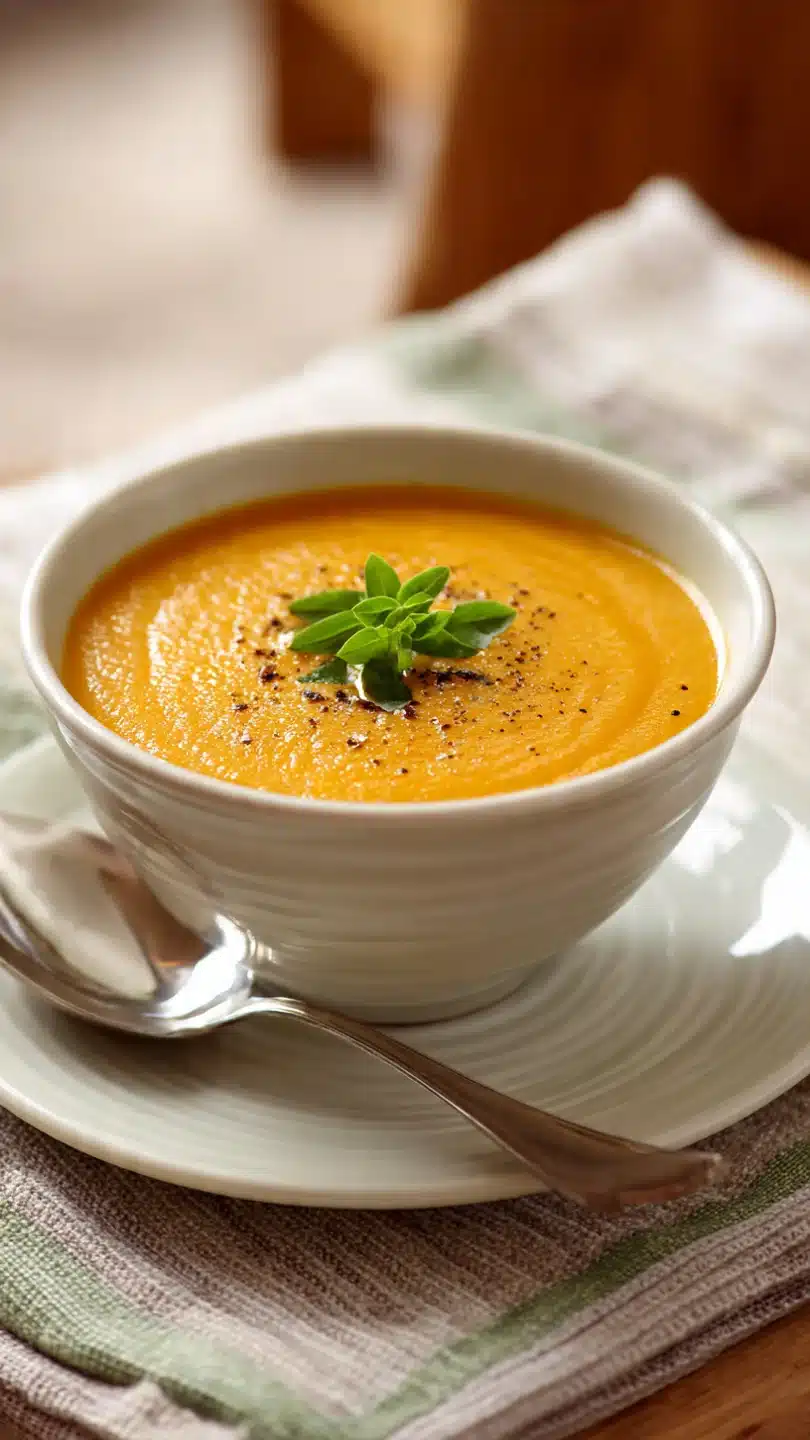
Creamy Butternut Squash & Ginger Soup
Ingredients
Equipment
Method
- In a large pot or Dutch oven, melt the butter over medium heat. Add the finely chopped onion and cook for 5-7 minutes until very soft and translucent, but not browned. Stir in the grated ginger and cook for another 60 seconds until fragrant. This gentle sauté builds a sweet, aromatic base without any harsh flavors.
- Add the cubed butternut squash and broth to the pot. Increase the heat to bring to a boil, then immediately reduce to a simmer. Cover and cook for 20-25 minutes, or until the squash is fork-tender. Believe me, this slow simmer is key to developing a naturally sweet flavor without needing to add sugar.
- Carefully transfer the hot soup to a high-powered blender. Add the nutmeg. Blend on high until completely smooth and velvety, which should take 1-2 minutes. For absolute smoothness, you can pass the soup through a fine-mesh sieve back into the pot. This step is crucial for a truly low-fiber texture.
- Return the pureed soup to the pot over low heat. Stir in the heavy cream or coconut milk. Season carefully with salt and white pepper. Tip from me: always season at the end, after adding the cream, as its fat content can mute saltiness. Heat through gently for 2-3 minutes, but do not boil.
- Ladle the soup into warm bowls. For a professional touch, you can garnish with a tiny drizzle of cream and a whisper of nutmeg. Step back and admire the beautiful, creamy color. Serve immediately while warm and comforting.


