
Best Thanksgiving Turkey Recipe
Why You’ll Love This Recipe
- Juicy and Flavorful: The herb butter under the skin and slow roasting method ensure a moist, flavorful turkey every time.
- Easy to Make: Despite the impressive results, this recipe is straightforward and easy to follow, even for novice cooks.
- Customizable: You can adjust the herbs and seasonings to suit your family’s preferences.
- Perfect for Thanksgiving: This turkey recipe is a showstopper that will impress your guests and become a holiday tradition.
- Healthy Option: With minimal added fats and a focus on herbs and vegetables, this recipe is a healthier choice for your holiday feast.
Ingredients & Preparation Notes
- Whole turkey: Choose a fresh or fully thawed frozen turkey between 12-14 lbs. Ensure the turkey is completely thawed before cooking for even cooking.
- Unsalted butter: Softened butter mixed with herbs creates a flavorful base for the turkey.
- Fresh herbs: Rosemary, thyme, and sage add aromatic flavors. You can use dried herbs if fresh are unavailable, but reduce the quantity by half.
- Garlic: Freshly minced garlic adds a punch of flavor. You can use garlic powder in a pinch, but fresh is best.
- Lemon: The zest and juice add brightness and help tenderize the meat.
- Kosher salt and black pepper: Essential for seasoning the turkey.
- Onion, carrots, and celery: These aromatics add flavor to the turkey and can be used to make gravy after roasting.
- Chicken broth: Helps keep the turkey moist and adds flavor to the drippings.
When selecting your turkey, look for one with a moist appearance and no off odors. If using a frozen turkey, plan ahead and allow ample time for thawing in the refrigerator.
Professional Tips & Techniques
- Temperature and Timing: Roast the turkey at 325°F (163°C) for even cooking. A 12-14 lb turkey will take about 3-3.5 hours to reach the safe internal temperature of 165°F (74°C).
- Basting: Baste the turkey every 20 minutes after removing the foil to promote a golden, crispy skin. Use the pan juices or additional melted butter.
- Resting: Allow the turkey to rest for at least 30 minutes before carving. This step is crucial for juicy results as it lets the juices redistribute throughout the meat.
- Visual Cues: The turkey is done when the skin is golden brown and the juices run clear. Use a meat thermometer to confirm doneness.
- Common Mistakes: Avoid overcooking the turkey, as this can lead to dryness. Also, don’t skip the resting period, as it’s essential for moisture retention.
Recipe Variations
- Herb Variations: Try using different herbs like parsley, tarragon, or oregano to change the flavor profile.
- Citrus Twist: Substitute the lemon with orange or lime for a different citrus note.
- Spiced Turkey: Add spices like paprika, cumin, or coriander to the herb butter for a more exotic flavor.
- Gluten-Free Gravy: Use the pan drippings, strained and thickened with cornstarch, to make a delicious gluten-free gravy.
- Vegetarian Option: For a vegetarian main dish, try a stuffed squash or mushroom Wellington with similar herb and citrus flavors.
- Smoked Turkey: If you have a smoker, try smoking the turkey with the same herb butter for a unique twist.
- Brined Turkey: For an even juicier result, brine the turkey overnight before roasting with the herb butter.
- Butterfly (Spatchcock) Turkey: For faster cooking and more even results, consider butterflying the turkey before applying the herb butter and roasting.
Serving Suggestions
- Classic Thanksgiving Spread: Serve this turkey with traditional sides like mashed potatoes, green beans, stuffing, and cranberry sauce.
- Elegant Dinner Party: Pair the turkey with roasted root vegetables, a spinach salad, and a rich red wine for a sophisticated meal.
- Casual Family Gathering: Serve with cornbread, coleslaw, and baked beans for a more relaxed feast.
- Presentation Tips: Garnish the turkey with fresh herbs and citrus slices for a beautiful presentation. Consider carving the turkey at the table for a dramatic effect.
- Leftover Ideas: Use leftover turkey in sandwiches, soups, or casseroles. The carcass can be used to make a flavorful turkey stock.
Storage & Make-Ahead Tips
- Refrigeration: Store leftover turkey in an airtight container in the refrigerator for up to 3-4 days.
- Freezing: You can freeze cooked turkey for up to 3 months. Wrap portions tightly in foil or freezer bags to prevent freezer burn.
- Make-Ahead: You can prepare the herb butter up to 3 days in advance and store it in the refrigerator. The turkey can be stuffed with aromatics and refrigerated overnight before roasting.
- Reheating: Reheat leftover turkey gently in the oven at 325°F (163°C) until warmed through, or use in soups and casseroles.
Frequently Asked Questions
Q: Can I make this ahead of time?
A: Yes, you can prepare the herb butter and stuff the turkey with aromatics the day before roasting. Store the turkey in the refrigerator until ready to cook.
Q: How do I know when the turkey is done?
A: Use a meat thermometer to check the internal temperature. The turkey is done when it reaches 165°F (74°C) in the thickest part of the thigh.
Q: Can I use a different type of fat instead of butter?
A: Yes, you can use olive oil or another neutral oil instead of butter. The flavor will be slightly different, but it will still work well.
Q: What if I don’t have fresh herbs?
A: You can use dried herbs, but reduce the quantity by half as they are more concentrated in flavor.
Q: Can I make this recipe gluten-free?
A: Yes, this recipe is naturally gluten-free. Just ensure any sides or gravy you serve with it are also gluten-free.
Q: How can I make the skin crispier?
A: To achieve crispier skin, pat the turkey dry before applying the herb butter and consider increasing the oven temperature to 425°F (218°C) for the last 30 minutes of roasting.
Q: Can I use this recipe for a smaller turkey?
A: Yes, adjust the cooking time accordingly. A general rule is to roast for about 13 minutes per pound at 325°F (163°C).
Q: What can I do with the leftover turkey carcass?
A: Use the carcass to make a delicious turkey stock. Simmer it with water, vegetables, and herbs for a few hours, then strain and use the stock in soups or gravies.
Conclusion
This Best Thanksgiving Turkey Recipe is your go-to for a juicy, flavorful, and easy-to-make holiday centerpiece. The combination of herb butter, slow roasting, and professional techniques ensures a perfect turkey every time. Give it a try this Thanksgiving and impress your family and friends with your culinary skills.
Don’t forget to share your results on social media and let us know how it turned out. Enjoy your holiday feast!
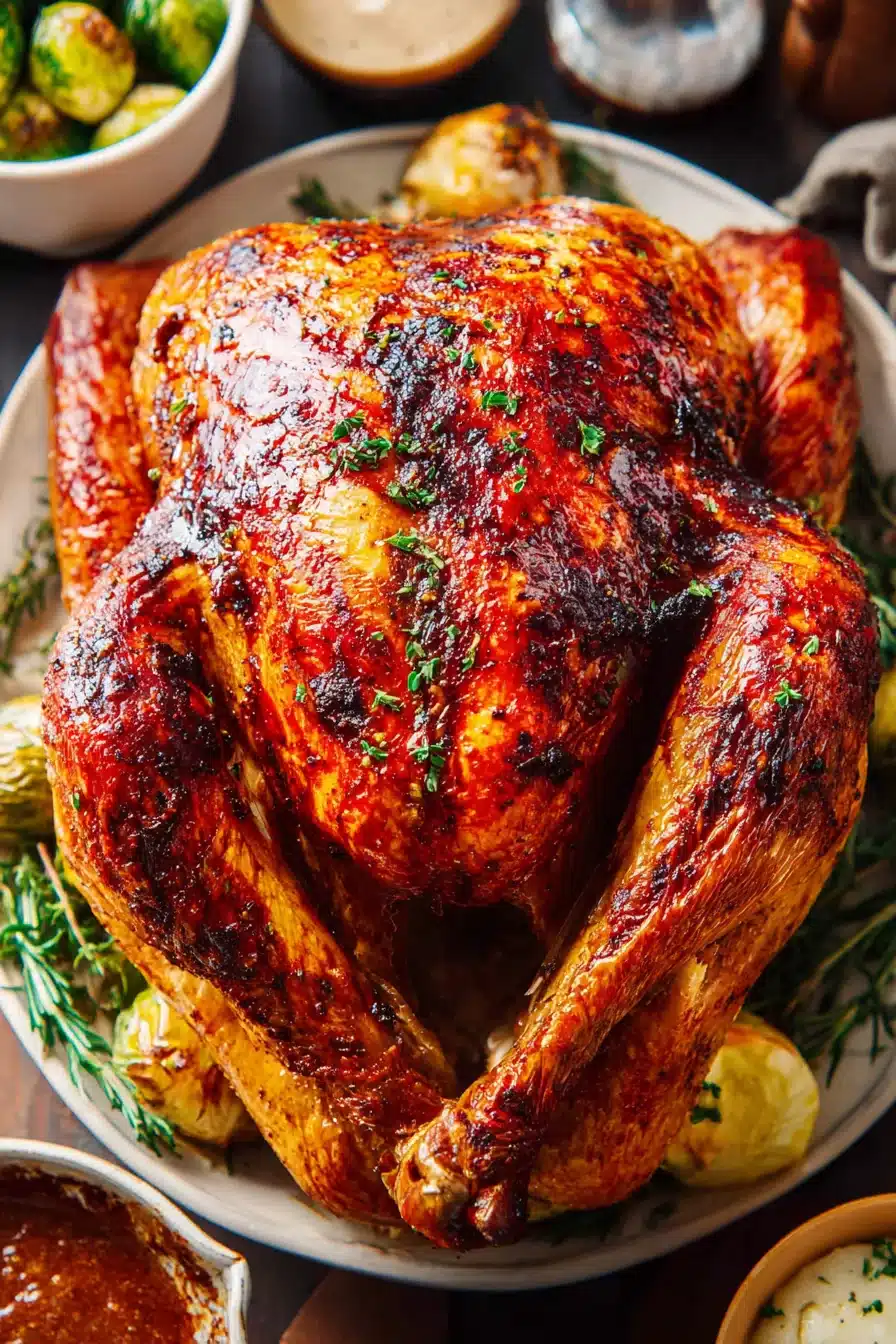
Best Thanksgiving Turkey
Ingredients
Equipment
Method
- Preheat your oven to 325°F (163°C). Remove the turkey from the refrigerator and let it sit at room temperature for about an hour before roasting.
- In a small bowl, mix the softened butter with rosemary, thyme, sage, garlic, lemon zest, salt, and pepper to create a herb butter. Gently loosen the skin over the turkey breast and spread half of the herb butter under the skin. Rub the remaining herb butter all over the outside of the turkey.
- Stuff the turkey cavity with the quartered onion, carrot chunks, and celery stalks. Tie the legs together with kitchen twine and tuck the wing tips under the body.
- Place the turkey on a roasting rack in a roasting pan. Pour the chicken broth into the bottom of the pan. Cover the turkey loosely with foil and roast for about 2 hours.
- Remove the foil and continue roasting for another 30-60 minutes, basting every 20 minutes, until the internal temperature reaches 165°F (74°C) in the thickest part of the thigh.
- Let the turkey rest for at least 30 minutes before carving. This allows the juices to redistribute, ensuring a moist and flavorful bird.


