
Juicy Prime Rib Recipe
- Juicy and Tender: The high-low roasting method ensures a perfectly cooked prime rib with a juicy interior and a flavorful crust.
- Flavorful Herb Crust: Fresh garlic, rosemary, and thyme create an aromatic and delicious coating.
- Impressive Presentation: Perfect for holidays and special occasions, this roast will be the centerpiece of your table.
- Easy to Master: With clear instructions and professional tips, you’ll achieve restaurant-quality results at home.
- Versatile: Easily adaptable to different sizes and preferences, making it suitable for any gathering.
Ingredients You’ll Need
Let’s gather our ingredients—these simple pantry staples create magic together. For the perfect prime rib, you’ll need:
- Prime rib roast: A bone-in roast about 6 pounds will serve 6 people generously.
- Garlic: Four cloves, minced, add a robust flavor to the herb crust.
- Fresh rosemary: Two tablespoons, finely chopped, for a fragrant touch.
- Fresh thyme: Two tablespoons, finely chopped, complementing the rosemary beautifully.
- Kosher salt: One tablespoon to enhance the meat’s natural flavors.
- Black pepper: One tablespoon, coarsely ground, for a bit of spice.
- Olive oil: Two tablespoons to help the herb mixture adhere to the roast.
When selecting your prime rib, look for marbling throughout the meat, which will contribute to its tenderness and flavor. If fresh herbs are unavailable, dried herbs can be used, but reduce the quantity by half.

Note: You’ll find the complete list of ingredients, along with their exact measurements, in the printable recipe card at the bottom of this post.
Kitchen Equipment Needed
To prepare this juicy prime rib, you’ll need:
- Roasting pan: A sturdy pan to hold the roast and catch the drippings.
- Meat thermometer: Essential for monitoring the internal temperature accurately.
- Aluminum foil: For tenting the roast while it rests.
How to Make Juicy Prime Rib Recipe
Step 1: Preheat and Prepare
Preheat your oven to 450°F (230°C). While the oven heats, mix the garlic, rosemary, thyme, salt, pepper, and olive oil in a bowl. Rub this mixture all over the prime rib, ensuring an even coat.
Trust me, this herb crust will elevate the flavor to new heights. Let the roast sit at room temperature for about an hour before cooking.
Step 2: Sear the Roast
Place the roast bone-side down in a roasting pan. Insert a meat thermometer into the thickest part of the meat, avoiding the bone. Roast at 450°F for 15 minutes to create a nice crust.
This initial high heat is crucial for sealing in the juices.
Step 3: Slow Roast to Perfection
Reduce the oven temperature to 325°F (160°C) and continue roasting. For a medium-rare roast, aim for an internal temperature of 130-135°F (54-57°C), which should take about 15 minutes per pound. Believe me, this slow roasting will result in a tender, juicy prime rib.
Step 4: Rest and Relax
Once the roast reaches your desired doneness, remove it from the oven and tent it loosely with foil. Let it rest for at least 20 minutes before slicing. This is the fun part—watching the juices redistribute, ensuring each slice is moist and flavorful.
Step 5: Slice, Serve, and Enjoy
Now comes the satisfying moment—slicing the prime rib. Cut between the bones to serve, and step back to admire your masterpiece. Serve with your favorite sides and a glass of red wine for the perfect meal.
Pro tip: To ensure a perfectly cooked roast, always use a meat thermometer. The internal temperature is the best indicator of doneness, not the cooking time alone. Temperature matters: Let the roast come to room temperature before cooking. This helps it cook more evenly and prevents the exterior from overcooking while the interior reaches the desired temperature. Timing is key: For a medium-rare prime rib, remove it from the oven when the internal temperature reaches 130°F (54°C). The temperature will continue to rise as it rests, reaching the ideal 135°F (57°C). Avoid common mistakes: Don’t skip the resting period. Slicing the roast too soon will cause the juices to run out, leaving the meat dry. Visual cues: Look for a nicely browned crust on the outside. This indicates the high-heat sear was successful, contributing to the roast’s flavor and texture.Recipe Variations & Customizations
- Herb Infusion: For a different flavor profile, try adding fresh herbs like basil or oregano to the herb crust. These herbs can add a unique twist to the classic recipe.
What to Serve With This Recipe
Pair your juicy prime rib with these delicious options:
- Sides: Creamy mashed potatoes, roasted vegetables, or a fresh Caesar salad complement the rich flavors of the roast.
- Sauces: A classic horseradish sauce or au jus can enhance the taste of the prime rib.
- Beverages: A robust red wine like Cabernet Sauvignon or a full-bodied Merlot pairs perfectly with the meat.
- Occasions: Ideal for holiday dinners, special occasions, or intimate gatherings with loved ones.
Storage & Make-Ahead Instructions
- Store leftover prime rib in an airtight container in the refrigerator for up to 3 days. For longer storage, wrap tightly and freeze for up to 3 months. To reheat, place slices in a baking dish, cover with foil, and warm in a 250°F (120°C) oven until heated through.
To make ahead, prepare the herb crust and rub it onto the roast the night before. Cover and refrigerate overnight. Remove from the refrigerator an hour before cooking to allow it to come to room temperature.
When storing, avoid cutting the roast until ready to serve to maintain its juiciness. Always check for spoilage before consuming leftovers.
Nutritional Benefits
- Prime rib is a rich source of protein, essential for muscle growth and repair. It also contains healthy fats, which can support heart health when consumed in moderation. The herbs used in the crust provide antioxidants and additional flavor without adding significant calories.
For a calorie-conscious modification, trim excess fat from the roast before cooking and serve with lighter sides.
Frequently Asked Questions
Q: Can I make this ahead of time?
Yes, you can prepare the herb crust and apply it to the roast the night before. Let it sit in the refrigerator overnight and bring it to room temperature before cooking.
Q: What can I substitute for fresh herbs?
If fresh herbs are unavailable, use dried herbs. Reduce the quantity by half since dried herbs are more concentrated.
Q: How do I know when the prime rib is done?
Use a meat thermometer to check the internal temperature. For medium-rare, remove the roast from the oven at 130°F (54°C), as it will continue to cook while resting.
Q: Can I freeze leftover prime rib?
Yes, wrap the cooled prime rib tightly and freeze for up to 3 months. Thaw in the refrigerator before reheating.
Q: How can I adjust the flavor of the herb crust?
Experiment with different herbs like basil or oregano, or add spices like red pepper flakes for a spicy kick.
Q: What’s the best way to reheat prime rib?
Preheat your oven to 250°F (120°C), place slices in a baking dish, cover with foil, and heat until warmed through.
Q: Can I use a boneless prime rib roast?
Yes, a boneless roast works well. Adjust the cooking time as boneless roasts may cook faster.
Q: Is prime rib suitable for a keto diet?
Yes, prime rib is keto-friendly. Serve with low-carb sides to keep the meal keto-compliant.
Recipe Origin or History
Prime rib, also known as standing rib roast, has its roots in traditional British and American cuisine. Often served during holidays and special occasions, it’s a symbol of celebration and indulgence. While the classic version is simple, modern variations include different herb crusts and sauces to suit various tastes.
Final Thoughts
This juicy prime rib recipe is perfect for those looking to impress their guests with a delicious, tender roast. The high-low roasting method, combined with a flavorful herb crust, ensures a moist interior and a delectable crust. Easy to prepare yet elegant, this dish is ideal for any special occasion.
I encourage you to give this recipe a try and share your results with me. Your feedback and ratings help me refine my recipes, and I’d love to see your creations on social media. Serve your prime rib with a side of horseradish sauce and your favorite wine for a truly memorable meal.
Explore more recipes on my blog and enjoy the art of cooking!
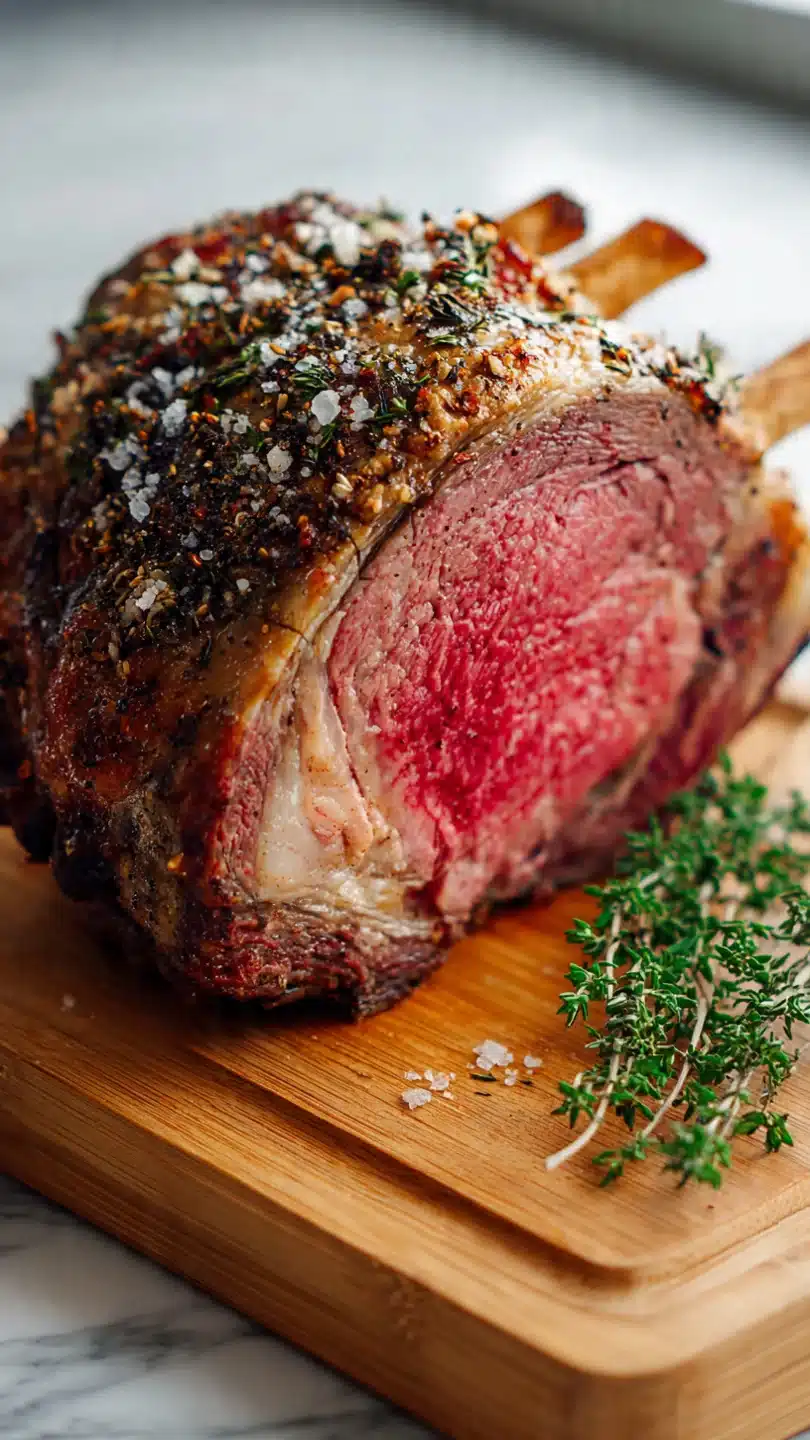
Juicy Prime Rib
Ingredients
Equipment
Method
- Preheat your oven to 450°F (230°C). This high initial temperature will help sear the outside of the roast, locking in juices.
- In a small bowl, mix the minced garlic, chopped rosemary, thyme, salt, pepper, and olive oil to create a paste. Rub this mixture all over the prime rib, ensuring it’s evenly coated. Let the roast sit at room temperature for about an hour before cooking.
- Place the roast bone-side down in a roasting pan. Insert a meat thermometer into the thickest part of the meat, avoiding the bone. Roast at 450°F for 15 minutes to create a nice crust.
- Reduce the oven temperature to 325°F (160°C) and continue roasting until the internal temperature reaches your desired doneness. For medium-rare, aim for 130-135°F (54-57°C), which should take about 15 minutes per pound.
- Once done, remove the roast from the oven and tent it loosely with foil. Let it rest for at least 20 minutes before slicing. This resting period allows the juices to redistribute, ensuring a moist and flavorful prime rib.


