
Olive Oil Poached Salmon w/ Herb Vinaigrette
Why You’ll Love This Recipe
- Easy to Make: Despite its elegant presentation, this dish requires minimal effort.
- Flavorful and Moist: The low-temperature poaching in olive oil ensures a tender, flavorful salmon every time.
- Healthy Option: Packed with omega-3s and protein, this dish is a nutritious choice.
- Versatile Serving: Perfect for a casual family dinner or an upscale dinner party.
- Diet-Friendly: Gluten-free, low-carb, and keto-friendly, making it suitable for various dietary needs.
Ingredients & Preparation Notes
- Salmon Fillets: Opt for fresh, high-quality salmon. Skinless fillets work best for even poaching.
- Extra Virgin Olive Oil: Use a good quality oil as it will impart flavor to the salmon. Ensure you have enough to fully submerge the fillets.
- Herbs: Thyme and rosemary add subtle flavors to the poaching oil, while parsley, dill, and chives bring freshness to the vinaigrette.
- Garlic and Lemon: These aromatics enhance the poaching oil, infusing the salmon with additional flavor.
- White Wine Vinegar: Adds a tangy note to the vinaigrette, balancing the richness of the oil.
For substitutions, you can use other fresh herbs like basil or tarragon in the vinaigrette. If you prefer a milder flavor, substitute the white wine vinegar with lemon juice.
Professional Tips & Techniques
- Temperature Control: Use an oven thermometer to ensure your oven maintains the low temperature needed for poaching. The oil should be around 120°F (49°C) before adding the salmon.
- Gentle Handling: When placing the salmon in the oil, do so gently to avoid splashing. Use a slotted spatula to remove the salmon to prevent it from breaking apart.
- Doneness Check: The salmon is done when it reaches an internal temperature of 125°F (52°C) for medium-rare. It should be slightly translucent in the center.
- Visual Cues: Look for the salmon to turn a light pink color and feel firm to the touch but still tender.
Recipe Variations
- Citrus Variation: Add orange or grapefruit slices to the poaching oil for a citrusy twist.
- Spicy Version: Include a few slices of jalapeño or red chili in the poaching oil for a spicy kick.
- Herb-Crusted: Before poaching, coat the salmon with a mixture of chopped fresh herbs and breadcrumbs for added texture.
- Vegetarian Option: Substitute the salmon with thick slices of tofu or portobello mushrooms for a plant-based version.
- Seasonal Adaptations: Use seasonal herbs like basil in summer or sage in fall for the vinaigrette.
- Flavor Variations: Experiment with different vinegar types, such as balsamic or apple cider, to change the vinaigrette’s flavor profile.
- Low-Fat Option: Use a lighter oil like grapeseed oil for poaching if you’re watching your fat intake.
- Grilled Variation: For a different texture, grill the salmon fillets and serve with the herb vinaigrette.
Serving Suggestions
- Casual Dinner: Serve with a side of roasted vegetables or a simple green salad for a healthy, balanced meal.
- Elegant Dinner Party: Present the salmon on a bed of microgreens or arugula, garnished with edible flowers for an upscale look.
- Presentation Tips: Drizzle the vinaigrette artfully over the salmon, and consider adding a few whole herb sprigs for a fresh touch.
- Pairing Suggestions: Pair with a crisp white wine like Sauvignon Blanc or a light Pinot Noir to complement the dish’s flavors.
Storage & Make-Ahead Tips
- Refrigeration: Store leftovers in an airtight container in the refrigerator for up to 2 days.
- Make-Ahead: The herb vinaigrette can be made up to 3 days in advance and stored in the refrigerator. Let it come to room temperature before serving.
- Freezing: While the salmon can be frozen, the texture may change slightly upon reheating. Freeze in an airtight container for up to 1 month.
- Reheating: Reheat gently in a low oven (275°F/135°C) to preserve the salmon’s moisture and texture.
Frequently Asked Questions
Q: Can I make this ahead of time?
A: Yes, the herb vinaigrette can be prepared up to 3 days in advance. The salmon is best enjoyed fresh but can be gently reheated.
Q: What type of salmon should I use?
A: Fresh, wild-caught salmon is ideal, but high-quality farmed salmon works well too. Look for skinless fillets for even poaching.
Q: Can I use a different oil for poaching?
A: While olive oil provides the best flavor, you can use other oils like grapeseed or avocado oil, though the taste will vary.
Q: How do I know when the salmon is done?
A: Use an instant-read thermometer to check for an internal temperature of 125°F (52°C). The salmon should be slightly translucent in the center.
Q: Can I use dried herbs instead of fresh?
A: Fresh herbs are preferred for their vibrant flavor, but you can use dried herbs in a pinch. Use about 1/3 the amount of dried herbs as fresh.
Q: What can I serve with this dish?
A: Roasted vegetables, a light salad, or a side of quinoa or rice would complement the salmon well.
Q: Can I poach the salmon on the stovetop?
A: Yes, you can poach on the stovetop using a thermometer to maintain a low temperature of around 120°F (49°C).
Q: Is this recipe suitable for meal prep?
A: Yes, you can poach the salmon and prepare the vinaigrette in advance. Store them separately and assemble when ready to serve.
Conclusion
Olive oil poached salmon with herb vinaigrette is a dish that combines simplicity with sophistication. The gentle poaching method ensures a moist, flavorful result, while the herb vinaigrette adds a fresh, vibrant touch. Whether you’re cooking for a special occasion or a weeknight dinner, this recipe is sure to impress.
Give it a try and share your results with us on social media. Enjoy the elegance and ease of this delightful dish!
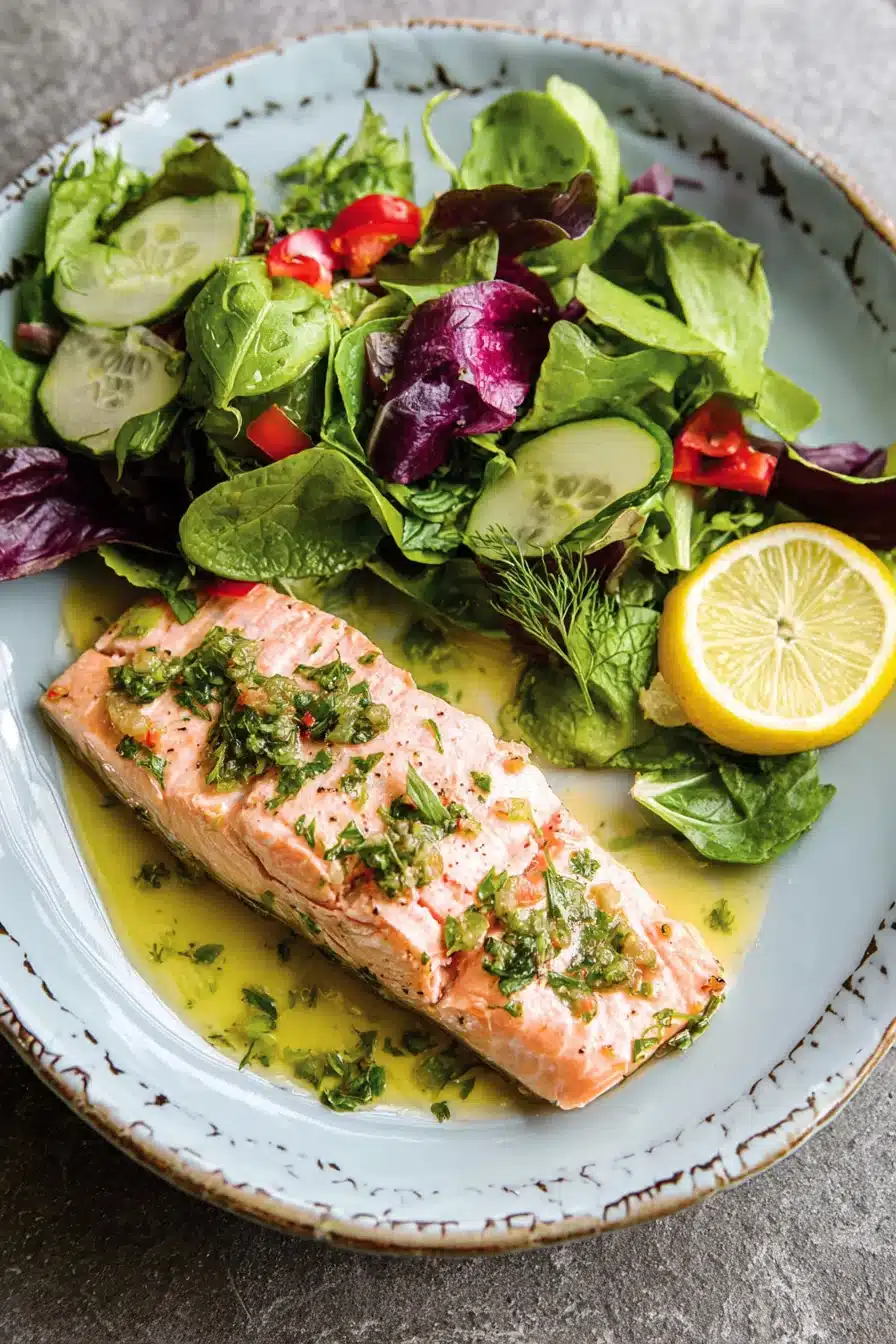
Olive Oil Poached Salmon with Herb Vinaigrette
Ingredients
Equipment
Method
- Preheat your oven to 275°F (135°C). This low temperature ensures gentle poaching, keeping the salmon moist and tender.
- In a deep baking dish, combine 2 cups of extra virgin olive oil, smashed garlic, thyme, rosemary, and lemon slices. Heat the oil mixture in the oven for about 10 minutes, until it reaches 120°F (49°C).
- Carefully place the salmon fillets into the warm oil, ensuring they are fully submerged. Return the dish to the oven and poach for 15-20 minutes, or until the internal temperature of the salmon reaches 125°F (52°C) for medium-rare.
- While the salmon poaches, prepare the herb vinaigrette. In a small bowl, whisk together the chopped parsley, dill, chives, white wine vinegar, and 1/4 cup of olive oil. Season with salt and pepper to taste.
- Once the salmon is cooked, carefully remove it from the oil using a slotted spatula and place it on a paper towel-lined plate to drain excess oil.
- Serve the salmon warm or at room temperature, drizzled with the herb vinaigrette.


