
Whole Grain Mustard Crusted Salmon
Whole Grain Mustard Crusted Salmon is a delicious and healthy meal that’s perfect for busy weeknights or special occasions. The tangy mustard crust adds a burst of flavor that complements the rich, tender salmon beautifully. This recipe is not only quick and easy to prepare but also packed with nutrients, making it a great choice for anyone looking to enjoy a wholesome dinner.
Why You’ll Love This Recipe
- Quick and Easy Preparation: With just a few simple steps, you can have a delicious meal ready in under 30 minutes.
- Flavorful Crust: The combination of whole grain and Dijon mustard creates a deliciously tangy and textured crust that elevates the salmon.
- Healthy Ingredients: Salmon is a great source of omega-3 fatty acids, which are beneficial for heart health and overall well-being.
- Versatile Dish: This recipe can be easily adapted to suit different dietary preferences and can be paired with a variety of sides.
- Impressive Presentation: The golden crust and vibrant garnish make this dish perfect for serving to guests.
- Kid-Friendly: The mild flavors and appealing texture make it a hit with children as well as adults.
Ingredients & Preparation Notes
- Salmon fillets: Choose fresh, high-quality salmon for the best flavor and texture. Look for fillets that are firm and have a vibrant color.
- Whole grain mustard: This adds a robust flavor and texture to the crust. You can substitute with Dijon mustard if needed, but the texture will be smoother.
- Dijon mustard: Adds a sharp, tangy flavor that complements the whole grain mustard.
- Honey: Balances the tanginess of the mustards with a touch of sweetness.
- Olive oil: Helps to bind the crust and adds a subtle richness.
- Garlic: Minced garlic adds a depth of flavor to the crust.
- Lemon zest: Provides a fresh, citrusy note that brightens the dish.
- Dried thyme: Adds an earthy, aromatic flavor to the crust.
- Salt and black pepper: Enhances the overall flavor of the dish.
- Lemon wedges: Serve on the side for a fresh squeeze of lemon juice to brighten the flavors.
- Fresh parsley: Adds a pop of color and freshness as a garnish.
When selecting salmon, opt for wild-caught varieties if possible, as they tend to have a richer flavor and higher nutritional content. If you’re looking for a substitution, you can use other firm-fleshed fish like trout or cod, though the cooking time may vary.
Professional Tips & Techniques
- Temperature and Timing: Bake the salmon at 400°F (200°C) for 12-15 minutes. The exact time may vary depending on the thickness of your fillets, so check for doneness by ensuring the salmon flakes easily with a fork and reaches an internal temperature of 145°F (63°C).
- Crust Application: Spread the mustard mixture evenly over the salmon to ensure every bite is flavorful. The thickness of the crust can be adjusted to your preference, but a thin layer is usually sufficient.
- Resting Time: Allow the salmon to rest for a few minutes after baking. This helps the juices redistribute, keeping the fish moist and flavorful.
- Broiling for Crispiness: For a crispier crust, you can broil the salmon for the last 1-2 minutes of cooking. Keep a close eye on it to prevent burning.
- Visual Cues: The salmon is done when it turns opaque and the crust is golden brown. If you’re unsure, use a fork to gently press the center of the fillet; it should flake easily.
Recipe Variations
- Herb Crust: Add finely chopped fresh herbs like dill, rosemary, or basil to the mustard mixture for an extra layer of flavor.
- Spicy Kick: Incorporate a pinch of cayenne pepper or a spoonful of hot sauce into the crust for those who enjoy a bit of heat.
- Citrus Twist: Swap out the lemon zest for orange or lime zest to change the citrus profile of the dish.
- Maple Glaze: Replace the honey with maple syrup for a different sweetness that pairs well with the mustard.
- Gluten-Free Option: This recipe is naturally gluten-free, but double-check your mustard labels to ensure they are free of gluten-containing ingredients.
- Vegetarian Alternative: For a vegetarian version, try using thick slices of tofu or portobello mushrooms instead of salmon.
- Seasonal Adaptations: In the summer, serve the salmon with a fresh tomato and cucumber salsa; in the winter, pair it with roasted root vegetables.
- Flavor Variations: Experiment with different mustards like honey mustard or spicy brown mustard to create unique flavor profiles.
Serving Suggestions
- Weeknight Dinner: Serve the salmon with a side of steamed vegetables and a grain like quinoa or brown rice for a balanced meal.
- Elegant Dinner Party: Plate the salmon alongside a bed of mixed greens and a drizzle of lemon vinaigrette for an elegant presentation.
- Family Gathering: Accompany the salmon with roasted potatoes and a simple green salad for a family-friendly feast.
- Light Lunch: Pair the salmon with a fresh arugula salad and some crusty bread for a satisfying yet light lunch.
- Presentation Tips: Garnish the salmon with a sprinkle of fresh herbs and a lemon wedge for a pop of color and freshness.
- Pairing Suggestions: This dish pairs well with a crisp white wine like Sauvignon Blanc or a light, fruity rosé.
Storage & Make-Ahead Tips
- Refrigeration: Store leftover salmon in an airtight container in the refrigerator for up to 3 days.
- Freezing: You can freeze cooked salmon for up to 2 months. Thaw in the refrigerator before reheating.
- Make-Ahead: The mustard crust can be prepared up to 2 days in advance and stored in the refrigerator. Simply spread it on the salmon before baking.
- Reheating: Reheat the salmon in a preheated oven at 350°F (175°C) for about 10 minutes, or until warmed through. Avoid microwaving to prevent the salmon from becoming rubbery.
Frequently Asked Questions
Q: Can I make this ahead of time?
A: Yes, you can prepare the mustard crust up to 2 days in advance and store it in the refrigerator. Apply it to the salmon just before baking.
Q: How do I know when the salmon is done?
A: The salmon is done when it flakes easily with a fork and reaches an internal temperature of 145°F (63°C). The crust should be golden brown.
Q: Can I use frozen salmon?
A: Yes, you can use frozen salmon. Thaw it completely in the refrigerator before cooking to ensure even cooking.
Q: What can I substitute for whole grain mustard?
A: You can use Dijon mustard or another type of mustard, though the texture of the crust will be smoother.
Q: Is this recipe suitable for a gluten-free diet?
A: Yes, this recipe is naturally gluten-free, but always check the labels of your mustard to ensure they are free of gluten-containing ingredients.
Q: Can I grill the salmon instead of baking it?
A: Yes, you can grill the salmon. Preheat your grill to medium-high heat, place the salmon skin-side down, and cook for about 10-12 minutes, or until done.
Q: What are some good side dishes to serve with this salmon?
A: Roasted vegetables, quinoa, brown rice, or a fresh salad all pair well with this dish.
Q: How can I make the crust crispier?
A: For a crispier crust, broil the salmon for the last 1-2 minutes of cooking. Keep a close eye on it to prevent burning.
Conclusion
Whole Grain Mustard Crusted Salmon is a versatile and delicious dish that’s easy to prepare and packed with flavor. The combination of tangy mustard, sweet honey, and fresh herbs creates a crust that perfectly complements the rich, tender salmon. Whether you’re cooking for a busy weeknight or a special occasion, this recipe is sure to impress.
Give it a try and share your results with us on social media. Enjoy your meal, and don’t forget to squeeze a bit of lemon juice over the salmon for an extra burst of freshness!
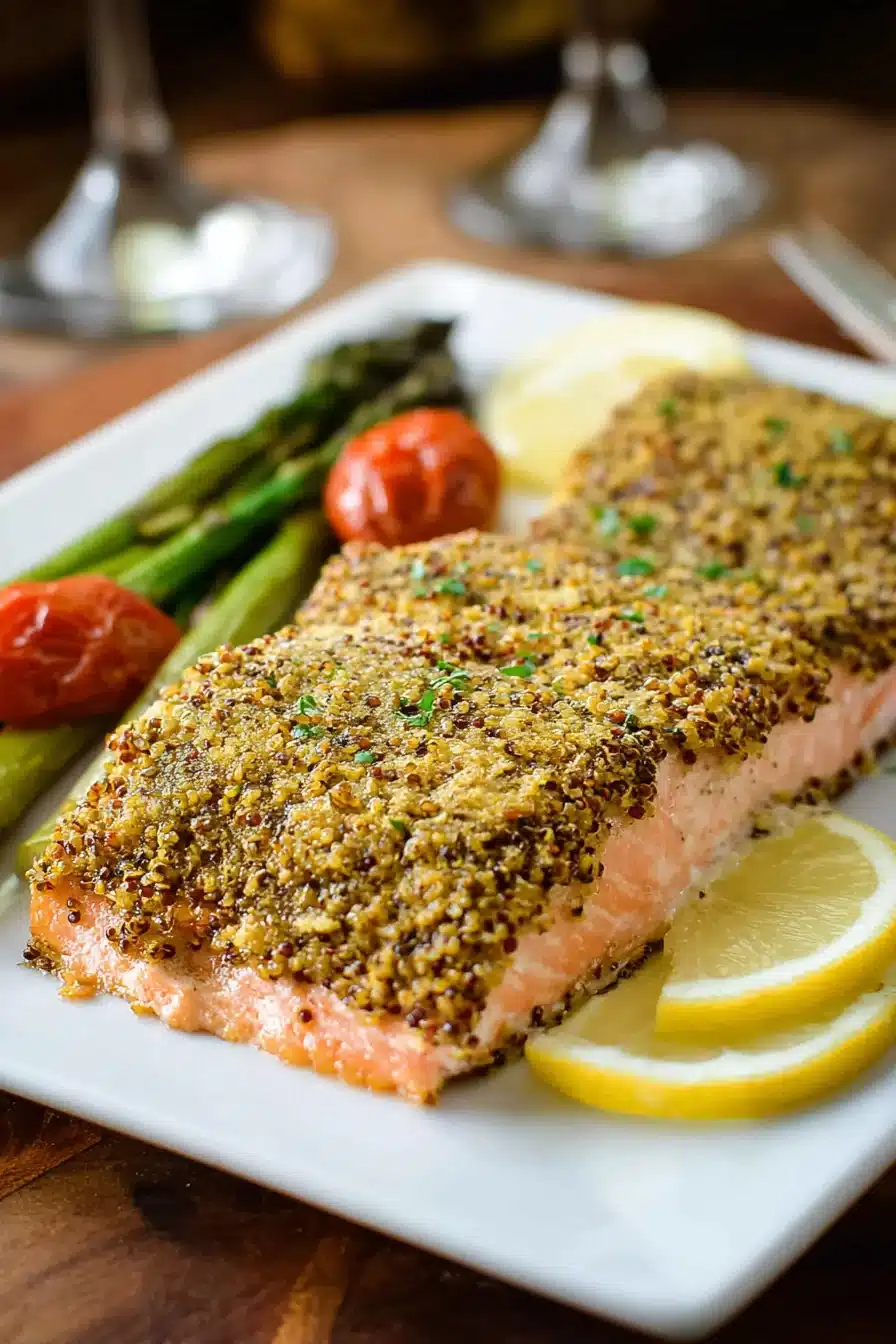
Whole Grain Mustard Crusted Salmon
Ingredients
Equipment
Method
- Preheat your oven to 400°F (200°C). Line a baking sheet with parchment paper or lightly grease it.
- In a small bowl, mix together the whole grain mustard, Dijon mustard, honey, olive oil, minced garlic, lemon zest, dried thyme, salt, and black pepper to create the mustard crust.
- Place the salmon fillets on the prepared baking sheet, skin side down. Spread the mustard mixture evenly over the top of each fillet.
- Bake the salmon in the preheated oven for 12-15 minutes, or until the salmon flakes easily with a fork and the internal temperature reaches 145°F (63°C).
- Remove the salmon from the oven and let it rest for a few minutes before serving. Garnish with fresh parsley and serve with lemon wedges on the side.


