Ingredients
Equipment
Method
- Make the Dashi Broth. In a medium saucepan, combine the cold water and the piece of kombu. Let it soak for 10 minutes if you have time, then place over medium-low heat. Just before the water comes to a boil (you'll see small bubbles forming around the edges), remove the kombu. This prevents bitterness. Immediately add the katsuobushi, bring to a full boil, then immediately turn off the heat. Let it steep for 5 minutes, then strain through a fine-mesh sieve lined with cheesecloth or a paper towel. Do not press the flakes; just let the liquid drain through for a clear broth.
- Season the Broth. Return the strained dashi to the cleaned saucepan over medium heat. Add the soy sauce, mirin, and optional sugar. Bring to a gentle simmer, then immediately reduce the heat to low to keep it warm. Taste and adjust seasoning—it should be savory, slightly sweet, and deeply umami. Tip from me: The broth should taste a touch saltier than you'd like on its own, as the noodles will absorb some seasoning.
- Cook the Soba Noodles. Bring a large pot of unsalted water to a rolling boil. Add the soba noodles, stirring gently to separate. Cook according to package directions, usually 4-6 minutes. Soba cooks quickly and can become mushy, so set a timer. While the noodles cook, prepare an ice water bath in a large bowl.
- Shock and Rinse the Noodles. As soon as the noodles are al dente, drain them and immediately plunge them into the ice water bath. Swirl them around with your hands to cool completely. This stops the cooking and removes surface starch, giving the noodles their signature springy, clean texture. Drain well and divide between two deep serving bowls.
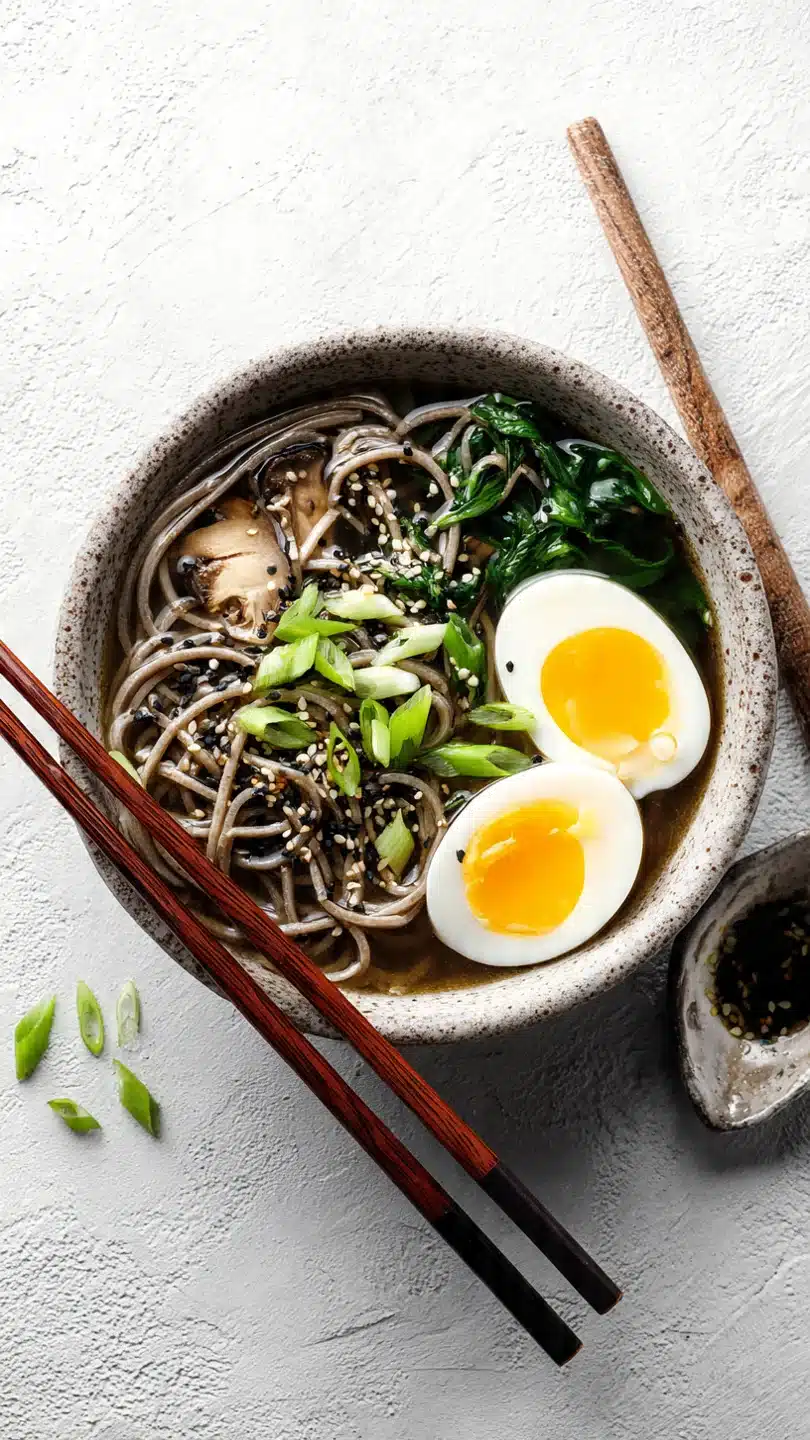
- Assemble and Serve. Ladle the hot seasoned broth over the cold noodles in each bowl. Trust me, this hot broth/cold noodle contrast is traditional and delightful. Top with sliced green onions and nori strips. If using, add a soft-boiled egg (cooked for 6.5 minutes, then peeled and halved). Serve immediately with shichimi togarashi on the side for those who want a spicy kick.
Notes
Chef's Tips:
• For a vegetarian dashi, omit katsuobushi and use 2-3 dried shiitake mushrooms with the kombu.
• Do not salt the noodle cooking water. Soba noodles are seasoned, and salt will make the final soup too salty.
• Serve with small dishes for condiments like extra soy sauce, grated ginger, or sesame seeds.
Food Safety:
• Dashi broth is best used immediately but can be refrigerated for 2 days. Reheat to a boil before serving.
• Cooked soba noodles should be served immediately after shocking. Do not leave at room temperature for extended periods.