
soba soup
There’s a unique comfort found in a bowl of clear, savory broth and springy noodles—a simplicity that feels both nourishing and elegant. As a chef, I’ve always been drawn to dishes where a few pristine ingredients are treated with respect, and soba soup is a perfect example. This isn’t just noodle soup; it’s a lesson in balancing umami, texture, and temperature.
When you get it right, the result is a light yet deeply satisfying meal that clears the mind as much as it warms the body. Let’s make a classic version you can master in your own kitchen.
This recipe demystifies a Japanese staple, turning it into an achievable weeknight dinner with restaurant-quality results.
- Quick & Weeknight-Friendly: From start to finish, you’re about 30 minutes away from a steaming bowl. The broth comes together while the noodles cook.
- Deep, Clean Flavors: Homemade dashi provides a savory foundation that is far superior to any powdered instant version, with a clarity you can taste.
- Textural Perfection: The ice-bath method for the noodles ensures each strand is delightfully springy and never gummy or mushy.
- Endlessly Customizable: This is a perfect template. Add seasonal vegetables, different proteins, or adjust the toppings to make it your own.
- Light Yet Satisfying: It’s a meal that feels wholesome and balanced, not heavy or overly rich.
- Culinary Technique Made Simple: You’ll learn the foundational skill of making dashi, which opens doors to countless other Japanese dishes.
Ingredients You’ll Need
- Let’s gather our ingredients. The magic of this soup lies in the quality and balance of its few components. Don’t be intimidated by the Japanese names—these are simple, foundational items.
For the Dashi Broth, you’ll need kombu (dried kelp) and katsuobushi (bonito flakes). Together, they create the quintessential Japanese umami base. Look for them in the Asian foods aisle of well-stocked supermarkets, at Japanese grocery stores, or online.
For the Seasonings, we use soy sauce and mirin. I recommend usukuchi (light-colored) soy sauce for a clearer, more traditional-looking broth, but regular soy sauce works perfectly. Soba Noodles are the star.
Check the package—many contain a blend of buckwheat and wheat flour. For a gluten-free version, seek out 100% buckwheat soba. Finally, the Toppings are where you can play: classic green onions, nori, and a soft-boiled egg make it a complete meal.

Note: You’ll find the complete list of ingredients, along with their exact measurements, in the printable recipe card at the bottom of this post.
Kitchen Equipment Needed
You don’t need specialized gear. A medium saucepan for the broth and a large pot for boiling noodles are essential. A fine-mesh sieve (lined with a paper towel if you don’t have cheesecloth) is crucial for straining the dashi crystal clear.
You’ll also need a large bowl for the ice bath to shock the noodles. Tongs or chopsticks make handling the hot noodles easier.
How to Make Soba Soup Recipe
Step 1: Craft the Dashi Broth
Place the kombu in cold water and let it sit for a few minutes if you can. Then, gently heat it over medium-low. Here’s a pro tip from the kitchen: you must remove the kombu just before the water boils.
If you see small bubbles gathering around the edges, it’s time. Leaving it in too long makes the broth bitter. Once the kombu is out, add the bonito flakes, bring it to a full boil, and then immediately turn off the heat.
Let it steep for five minutes—this infuses the water with a smoky, savory depth. Finally, strain it gently; don’t press the flakes, or your broth will become cloudy.
Step 2: Season to Perfection
Return that beautiful, clear dashi to your clean pot. Add the soy sauce, mirin, and a pinch of sugar if using. Bring it back to a gentle simmer, then immediately reduce the heat to the lowest setting to keep it hot without reducing.
Now, taste it. Believe me, it should taste a bit stronger and saltier than you think is right. This is because the plain noodles will absorb some of the seasoning, balancing everything in the bowl.
Adjust with a drop more soy sauce or mirin until it sings.
Step 3: Cook the Soba Noodles
While the broth simmers, bring a large pot of unsalted water to a rolling boil. Add your soba bundles, stirring immediately to prevent sticking. Set a timer for the low end of the package’s range (often 4 minutes).
Soba goes from perfect to pasty in moments, so vigilance is key. As they cook, prepare your ice bath in a large bowl. This step is non-negotiable for the ideal texture.
Step 4: Shock for Springy Texture
The moment the timer goes off, drain the noodles and immediately plunge them into the ice water. Use your hands to swish them around, washing off the exterior starch and halting the cooking process completely. You’ll feel the noodles go from soft to firm and elastic.
Drain them thoroughly. This method, trust me, gives you that authentic, clean, springy bite that defines great soba.
Step 5: Assemble and Serve
Divide the cold, drained noodles between two deep bowls. Now, ladle the piping hot broth directly over them. This contrast is traditional and wonderful.
Top with a flurry of green onions, nori strips, and halve a soft-boiled egg if you’ve prepared one. Serve it right away, encouraging everyone to mix their toppings into the broth. Step back and admire your beautiful, restaurant-worthy bowl.
A few chef-level insights will ensure your soba soup is flawless every time.
- Kombu Quality: Look for kombu that is thick, dark, and has a whitish powder on the surface. That powder is natural glutamate—the source of umami—so don’t wash it off, just wipe gently with a damp cloth.
- Broth Clarity: The key to a crystal-clear dashi is gentle heat and no agitation. Never let the kombu boil, and never squeeze the bonito flakes when straining.
- Noodle Doneness: Soba is best eaten al dente. To test, bite a strand a minute before the package time is up. It should be tender but still offer a slight resistance.
- The Ice Bath: Don’t skip it or use lukewarm water. The rapid, severe temperature shock is what sets the noodles’ texture and prevents them from becoming a sticky mass.
- Serving Temperature: Serve immediately after assembling. The hot broth will warm the noodles perfectly without continuing to cook them.
Recipe Variations
- This basic template welcomes creativity. Here are some tested variations to make it your own.
- Vegetarian Soba Soup: Replace the katsuobushi with 3-4 dried shiitake mushrooms. Soak them with the kombu and simmer for 10 minutes after removing the kombu. Strain and proceed.
- Protein-Powered: Add thinly sliced cooked chicken breast, a few shrimp, or cubes of silken tofu in the final minute of warming the broth.
- Miso Soba: For a richer, cloudier broth, dissolve 2 tablespoons of white or red miso paste in a little warm broth, then stir it back into the pot at the very end, off the heat.
- Spicy Tan-Tan Style: Add a tablespoon of tahini, a teaspoon of chili oil, and a splash of rice vinegar to the broth for a nutty, spicy twist.
- Seasonal Vegetable: Add quick-cooking veggies like spinach, bok choy, or enoki mushrooms directly to the hot broth for the last minute before serving.
- Tempura Topping: Serve with a side of shrimp or vegetable tempura for a classic restaurant-style presentation.
- Chilled Zaru Soba: Skip the hot broth entirely. Serve the shocked noodles on a bamboo mat (zaru) with a concentrated dipping sauce (mentsuyu) on the side.
What to Serve With This Recipe
Soba soup is a complete meal in a bowl, but it pairs beautifully with lighter sides that complement its clean flavors. For a traditional Japanese meal, serve it with a small dish of sunomono (cucumber salad with rice vinegar) or a simple green salad with a ginger-sesame dressing. Gyoza (pan-fried dumplings) make for a fantastic and popular combination.
For beverages, green tea is the classic, non-alcoholic pairing, while a crisp, dry sake or a light lager beer works wonderfully if you’re enjoying an evening meal.
Storage & Make-Ahead Instructions
- This dish is best enjoyed immediately. However, you can prepare components ahead to streamline dinner.
- Broth: The seasoned dashi broth can be made up to 2 days in advance. Cool it completely, store it in an airtight container in the refrigerator, and reheat gently before serving.
- Noodles: Cooked and shocked soba noodles will keep, drained and stored separately in the fridge, for up to 24 hours. They may dry out slightly.
- Do Not Store Assembled: Avoid storing the noodles in the broth, as they will become soggy and absorb all the liquid.
- Reheating: Only reheat the broth portion. Pour it over the cold noodles straight from the fridge—the hot broth will warm them sufficiently.
- Freezing: I do not recommend freezing the assembled soup or the cooked noodles, as the texture of both will suffer dramatically.
Frequently Asked Questions
Q: Can I use instant dashi powder instead?
A: You can in a pinch, but the flavor profile will be different—often saltier and less nuanced. Use about 1 teaspoon of powder per cup of water, but taste before adding any additional soy sauce.
Q: My broth is cloudy. What did I do wrong?
A: Cloudiness usually comes from boiling the kombu or agitating/ squeezing the bonito flakes during straining. For clear broth, gentle heat and gentle straining are key.
Q: Are soba noodles gluten-free?
A: Most soba noodles contain a mix of buckwheat and wheat flour, so they are not gluten-free. For a gluten-free version, you must seek out packages labeled “100% buckwheat soba” and use tamari instead of soy sauce.
Q: Can I make this vegan?
A: Absolutely. Use the shiitake mushroom variation for the dashi (omit bonito), ensure your soba is 100% buckwheat or vegan, and use a vegan-friendly mirin (check for honey). Top with tofu and vegetables.
Q: Why is my soba soup bland?
A: The most common reason is under-seasoning the broth. Remember, it should taste a bit strong on its own. Also, ensure you’re using quality kombu and bonito that haven’t been sitting in your pantry for years.
Q: Do I have to shock the noodles in ice water?
A: For the authentic texture, yes. Rinsing in cold water stops the cooking and removes surface starch. If you skip it, the noodles will be softer, stickier, and the broth will become cloudy.
Q: What’s the best way to soft-boil an egg for the topping?
A: Bring a small pot of water to a boil. Gently lower room-temperature eggs in, reduce to a simmer, and cook for 6 minutes and 30 seconds for a jammy yolk. Immediately transfer to an ice bath, peel, and halve.
Q: Can I add the noodles directly to the broth to cook?
A: I don’t recommend it. Cooking the noodles separately allows you to control their texture perfectly and keeps the broth clear and free of excess starch.
Final Thoughts
Mastering this soba soup recipe is more than just adding a new dish to your repertoire; it’s about embracing a philosophy of cooking where simplicity, quality ingredients, and precise technique yield extraordinary results. The process of making dashi, cooking the noodles just right, and assembling the bowl is a calming, almost meditative practice. I hope this recipe gives you the confidence to explore more Japanese cooking and to appreciate the profound flavor that comes from a well-made broth.
Give it a try, play with the toppings, and make it your own. I’d love to hear how it turns out—share your creations with me online. Now, go enjoy that deeply satisfying, steaming bowl of your own making.
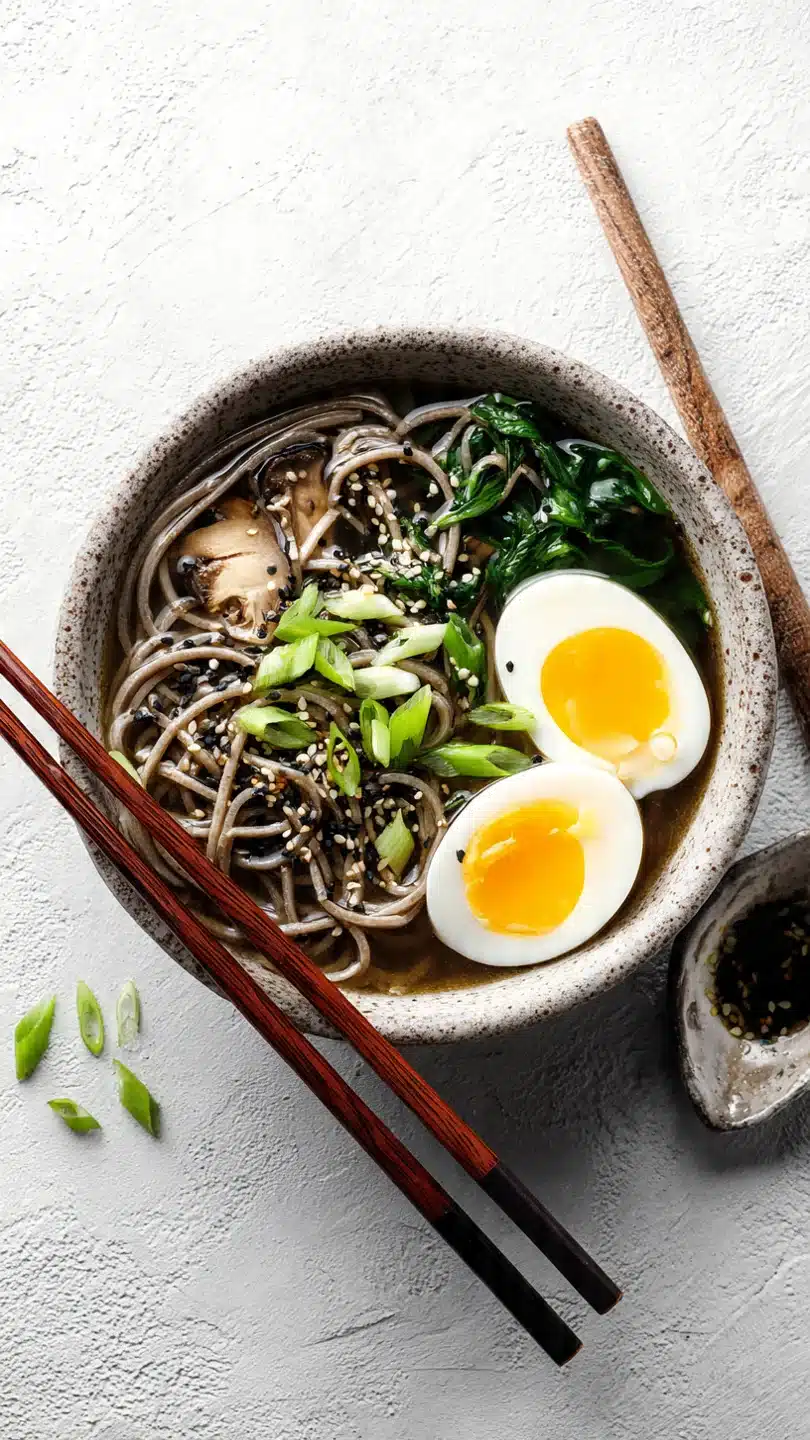
Authentic Soba Noodle Soup
Ingredients
Equipment
Method
- Make the Dashi Broth. In a medium saucepan, combine the cold water and the piece of kombu. Let it soak for 10 minutes if you have time, then place over medium-low heat. Just before the water comes to a boil (you’ll see small bubbles forming around the edges), remove the kombu. This prevents bitterness. Immediately add the katsuobushi, bring to a full boil, then immediately turn off the heat. Let it steep for 5 minutes, then strain through a fine-mesh sieve lined with cheesecloth or a paper towel. Do not press the flakes; just let the liquid drain through for a clear broth.
- Season the Broth. Return the strained dashi to the cleaned saucepan over medium heat. Add the soy sauce, mirin, and optional sugar. Bring to a gentle simmer, then immediately reduce the heat to low to keep it warm. Taste and adjust seasoning—it should be savory, slightly sweet, and deeply umami. Tip from me: The broth should taste a touch saltier than you’d like on its own, as the noodles will absorb some seasoning.
- Cook the Soba Noodles. Bring a large pot of unsalted water to a rolling boil. Add the soba noodles, stirring gently to separate. Cook according to package directions, usually 4-6 minutes. Soba cooks quickly and can become mushy, so set a timer. While the noodles cook, prepare an ice water bath in a large bowl.
- Shock and Rinse the Noodles. As soon as the noodles are al dente, drain them and immediately plunge them into the ice water bath. Swirl them around with your hands to cool completely. This stops the cooking and removes surface starch, giving the noodles their signature springy, clean texture. Drain well and divide between two deep serving bowls.
- Assemble and Serve. Ladle the hot seasoned broth over the cold noodles in each bowl. Trust me, this hot broth/cold noodle contrast is traditional and delightful. Top with sliced green onions and nori strips. If using, add a soft-boiled egg (cooked for 6.5 minutes, then peeled and halved). Serve immediately with shichimi togarashi on the side for those who want a spicy kick.


